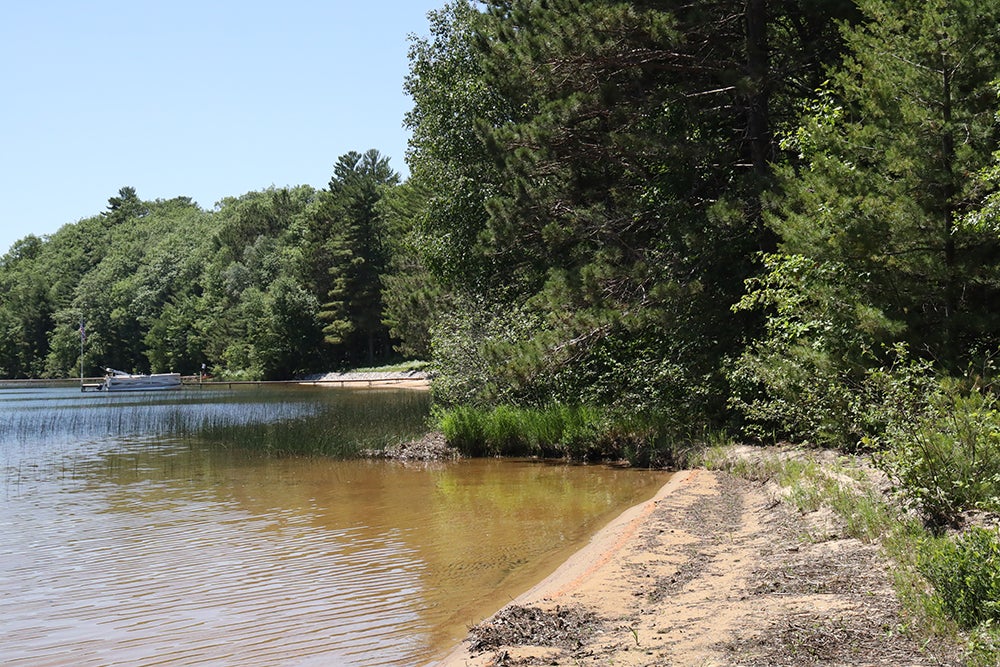
Property Dispute Arises Over Boat Launch Access in Wisconsin
A legal battle has emerged between property owners and the Lac du Flambeau Band of Lake Superior Chippewa, centering on access to a boat launch on private land. The conflict highlights ongoing tensions over jurisdiction and land use rights within the Lac du Flambeau reservation.
The White Sand Lake Association, representing local homeowners, initiated a lawsuit against the tribe earlier this month. The association’s dispute arises from a boat launch constructed on Mary Lou Fisher’s private property, which the tribe claims infringes its tribal code.
White Sand Lake, spanning over 1,200 acres, has become the focal point of the legal dispute. The association had previously faced an injunction from the tribal court, preventing the use of the boat launch. The civil complaint argues this decision disregards established legal precedents by higher courts.
The plaintiffs assert that they must now seek resolution through the U.S. District Court of Western Wisconsin, citing that “they cannot use their own residential land except under threat of tribal sanction.” The lawsuit further alleges, “The Band’s regulatory and enforcement activities conflict not only with plaintiffs’ rights, but with the inherent sovereignty of the state of Wisconsin.”
In response, the Lac du Flambeau Band has committed to addressing the lawsuit through legal avenues, emphasizing their “stewardship responsibility” towards the reservation’s lands and cultural resources. The tribe expressed concerns about environmental threats, such as the invasive Eurasian watermilfoil, and the need to protect cultural sites.
This legal confrontation is not the tribe’s first. Recently, a federal judge ruled against the tribe’s fishing restrictions for nonmembers, and last year, a ruling favored homeowners in a road access dispute involving tribal lands.
The current lawsuit challenges the tribe’s authority to impose regulations on “nonmembers, their privately owned, nonmember fee land and Wisconsin’s navigable waterways.” The suit contends that the 1854 treaty establishing the reservation does not extend jurisdiction over these waterways.
According to the lawsuit, the association sought to build the boat launch after the tribe indefinitely closed its own in 2024. They claim to have secured all necessary permits and consulted federal and state agencies, who confirmed no additional approvals were required.
Despite this, the tribe issued citations during construction and pursued a civil case in tribal court. The lawsuit argues, “The Band plainly lacks jurisdiction over the claims asserted in the Tribal Court,” and that tribal jurisdiction does not apply, nor is exhaustion required.
The association seeks a court declaration that the tribe lacks regulatory authority over the boat launch and requests injunctions to prevent further tribal claims against them.