Nebraska’s Winter Wheat Crop Faces Historic Challenges Amid Drought and Disease
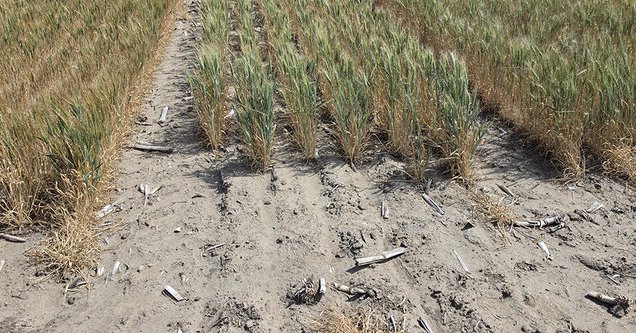
As Nebraska’s winter wheat crop encounters one of its toughest years, signs of improvement are minimal. This year’s harvest is poised to be among the smallest recorded, despite a slight uptick in yield projections.
The U.S. Department of Agriculture’s latest crop progress report indicates that Nebraska farmers are expected to harvest around 580,000 acres, with yields estimated at 29 bushels per acre. While this is a modest increase from June’s forecast of 28 bushels per acre, it pales in comparison to last year’s yield of 47 bushels per acre over 805,000 acres.
If the current projections hold true, this year’s harvest would mark the smallest in nearly 120 years, narrowly surpassing the 1917 record of 600,000 acres. Total production is projected at approximately 16.8 million bushels, which is less than half of last year’s 37.8 million bushels and represents a decline of nearly 65% compared to 2024.
Currently, about 25% of Nebraska’s winter wheat has been harvested, slightly ahead of the typical schedule. However, challenges remain, as noted by Royce Schaneman, Nebraska Wheat Board Executive Director, who stated that early harvest reports are “not great.”
The majority of Nebraska’s winter wheat is cultivated in the drought-stricken western region of the state. Adverse weather conditions, including early freezes and prevalent diseases, have further exacerbated the situation. Mid-June wheat disease surveys revealed widespread leaf rust, a damaging fungal disease, affecting the crops.
Faced with these adversities, more than a third of Nebraska wheat farmers are opting to abandon their crops this year, a rate over double the annual average. The crop condition has been rated as 93% poor or very poor.
On a national scale, the winter wheat crop is anticipated to decrease by 29% compared to last year. States such as Colorado, Kansas, Oklahoma, and Texas are also expected to see significant declines.
Mary Eisenzimmer, vice chairwoman of the Nebraska Wheat Board, cautioned that the poor wheat crop might drive up prices for flour and other goods. She told Harvest Public Media, “I hope we’re not going to be that short on supply this year that you’re going to see that come in the market, but that could be a real potential.”