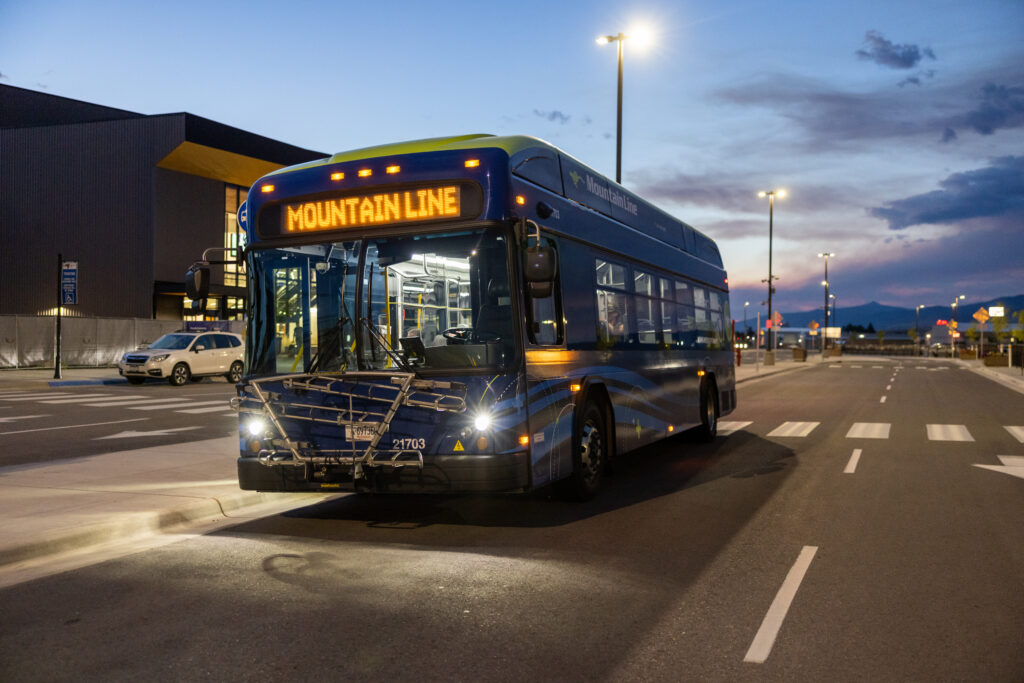

A Mountain Line bus is pictured in Missoula. (Mountain Line photo)
Montana legislators are keen on expanding state funding for public transportation projects. A recent public survey linked to a legislative study bill indicates strong community support for increased investment in public transit. The survey results, released last month, are set for discussion in a July 8 meeting. With Montana’s growth leading to crowded roads, especially in tourist areas, there is a push for increased public transit funding. Cities like Missoula and Bozeman have witnessed a rise in bus ridership.
Presently, state public transit funding is limited to services for the disabled and elderly. Regular bus services in Missoula and Bozeman depend on local taxes and federal grants. Legislators like Billings Democratic Rep. Denise Baum and Missoula Democratic Sen. Andrea Olsen, along with Glasgow Sen. Gregg Hunter, advocate for enhanced passenger rail services. “We don’t have room for as many cars as we have now without changing the system,” Olsen noted, emphasizing the need for state involvement.
The legislative survey reveals ridesharing services like Uber, followed by buses and the Essential Air Service, as the top public transit choices. The Essential Air Service, a federal program, supports small flights connecting remote communities, often filled to capacity, according to Hunter. These flights are vital for medical access to larger cities like Billings.
Hunter recalls using the air service for his son’s taekwondo training in larger cities, highlighting its importance for competitive training. “One of the biggest things that we’re happy about, and we couldn’t do without is the Cape Air, our airline service, our Essential Air,” Hunter said.
The survey also found that 30% of public transit users utilize it for recreation, with employment and shopping tying at 18%, and medical visits at 14%. The lack of frequent and well-connected routes was a common reason for not using public transit. Agencies are expanding offerings, with Missoula’s Mountain Line now providing summer rides to Marshall Mountain.
Passenger Rail
Advocacy groups and agencies like Big Sky Passenger Rail Authority are lobbying for more passenger rail services. A survey showed trains as the preferred transport mode if available. Dave Strohmaier, chair of Big Sky Passenger Rail Authority, noted that public interest aligns with past findings. “The public engagement that we’ve done, this falls right in line with what we’ve heard,” Strohmaier said. Train services could also boost tourism by facilitating access to popular destinations.
Baum’s attempt to secure $2 million for passenger rail funding failed due to opposition from industrial interests. Rail congestion is a concern as BNSF Railway extensively uses Montana railroads. Hunter supports increased passenger rail but worries about potential impacts on communities like Glasgow, which could lose vital rail services.
BNSF Railway assured there are no plans to close the Glasgow facility, employing 116 people there. They emphasize that any passenger rail expansion should not shift costs to freight rail customers. Despite setbacks, there is interest in reviving passenger rail, with advocates like Baum planning future legislative efforts. Funding could aid the Big Sky Passenger Rail Authority in securing grants for rail development.
Rail reconstruction could cost hundreds of millions, requiring federal assistance. The Empire Builder route, a key feature of the Hi-Line, is also a concern, with people fearing its loss. Baum and others see passenger rail as an accessibility issue, with potential to repurpose existing bus services for broader public use. The survey, part of Senate Joint Resolution 19, gathered 1,330 responses from 55 Montana counties.
Montana Fare Challenges
Gallatin Valley faces challenges after losing its rural status and associated federal funds. Local governments and counties bear most public transport costs, with federal grants as secondary support. Fares present a budgeting issue for small transit systems, as they’re not eligible for matching funds. Charging fares would not cover costs, reducing potential reimbursements, said Sunshine Ross, transit director at Gallatin Valley Urban Transportation District.