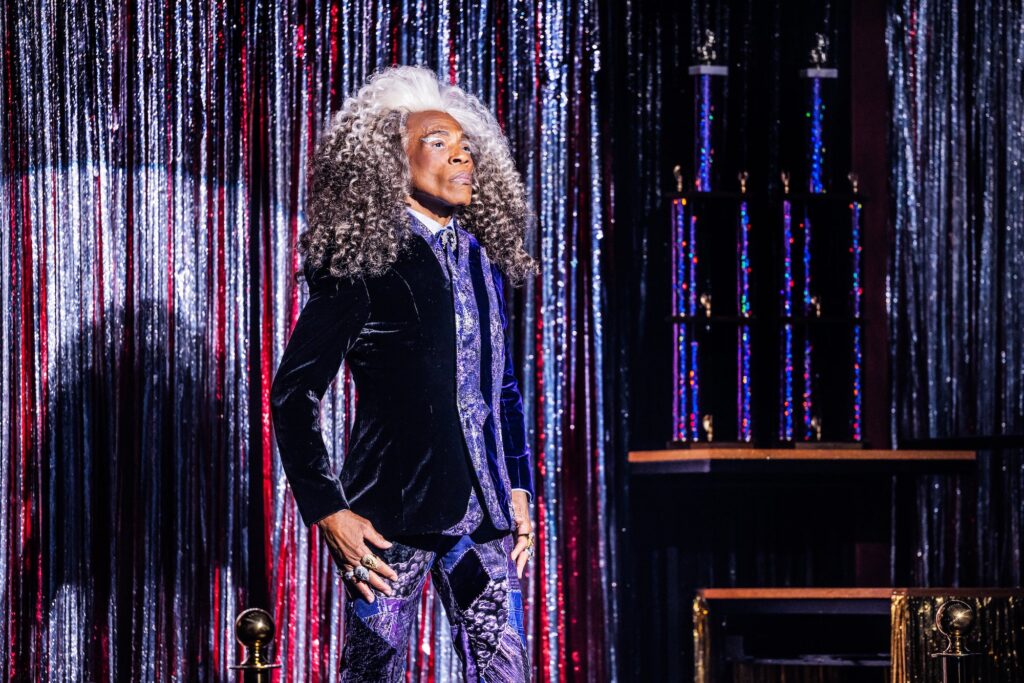
Broadway Legend André De Shields Delivers a ‘Joy Bomb’ in Reimagined “CATS”
Broadway icon André de Shields is bringing a fresh and vibrant energy to the stage with a unique revival of a classic musical. De Shields, an alumnus of the University of Wisconsin-Madison, is captivating audiences with his role in the reimagined “CATS: the Jellicle Ball.”
At the recent 2026 Tony Awards, de Shields was recognized with a nomination for Best Performance by an Actor in a Featured Role in a Musical for his portrayal of Old Deuteronomy. This new adaptation of Andrew Lloyd Webber’s “CATS” incorporates elements from ballroom culture, a dance-centric subculture that thrived from the 1960s to the ’80s within New York’s underground Black and Latino LGBTQ+ communities.
De Shields emphasized the musical’s relevance during Pride Month, saying, “Now that we’ve come out of the closet, we are beginning to live out loud. All people, regardless of sexual orientation, are coming to the show and celebrating. Because what we’re dropping on the people now is a joy bomb.” This sentiment was shared during an interview on WPR’s “Wisconsin Today.”
De Shields, who earned a Bachelor of Arts in English literature in 1970 from UW-Madison, has a storied career in theater, making his mark on Broadway after initial performances in Chicago. He is a recipient of the Tony, Grammy, and Emmy awards, with his 2019 Tony win for the role of Hermes in “Hadestown.”
During his appearance on “Wisconsin Today,” de Shields discussed his journey from Wisconsin to his current role in “CATS” and his recent Tony Awards performance.
This interview has been edited for length and clarity.
Rob Ferrett: What kind of message and feeling and energy were you trying to bring to this national primetime audience with your performance?
André De Shields: We are all in this together, or not in it at all. Ballroom is populated by citizens who have been traditionally marginalized to the edges of society … but things are leaning toward a new paradigm, I believe, and this paradigm is about embracing. This paradigm is about empathy. This paradigm is about everybody. Let your freak flag fly.
RF: You grew up in Baltimore. What made you look at UW-Madison and say, “That’s the place for me now?”
AD: I had gone to college initially at a Quaker school in Ohio all the way through my junior year abroad. When I returned from Europe in 1967, the “Quaker quad,” seemed very much tame. And politically speaking, things were a hotbed across American campuses, and I wanted to be where the action was. So I applied to other universities, and the University of Wisconsin accepted me on a similar work-study scholarship that I had done at Williamson College in Williamson, Ohio. So I said, “André, this is time to make the move.” It turned out when I arrived there I personally became part of the movement that gave the first Black studies department to the top 10 state schools, one of them being (at) the University of Wisconsin-Madison.

RF: It was a pretty wild time for theater at UW-Madison. There was a lot of experimental work that you were involved in with people like the late Stuart Gordon. What did that spirit of innovation mean for you at that time?
AD: It meant a way into the craft that I wanted to practice. Now, there was a vibrant theater community within the student body at the University of Wisconsin, but I never had an opportunity to work on the main stage there. I auditioned for pieces, but never was my name on the list that was posted outside of the Union Theater as being cast. This had also happened with a few other students who were admittedly Left, on the political scale. So Stuart Gordon, a young colleague of mine at the school, decided to screw theater, which became the title of our group that went on to experiment with ideas of our own consumption.
RF: You’re 80 years old. You told NPR recently that part of your mission is to advocate for the senior citizen who wants to be active as an artist. What kind of advice do you have for people in their 70s and 80s to not give up that creative life?
AD: The top of one mountain is the bottom of the next, so keep climbing. We get dealt a hard deal in an active industry like theater the older we become, but the truth is we’re still kicking — just not so high. I am happy to stand as a mascot for that senior citizen who continues to climb mountains.
RF: What advice do you try to share with that younger generation to experiment and try new things?
AD: Pursue only those blessings which have your name written upon them … The universe is a cornucopia, and its purpose is to spill nothing but blessings to those of us who are the microcosm version of its macrocosm. If we show gratitude for its generosity, we will never go astray. It’s only when we are pursuing blessings that are not intended for us, specifically, that we find things difficult. So I’m reminding the young people, who see so much that looks attractive: Abundance has your name on it. Pursue that.