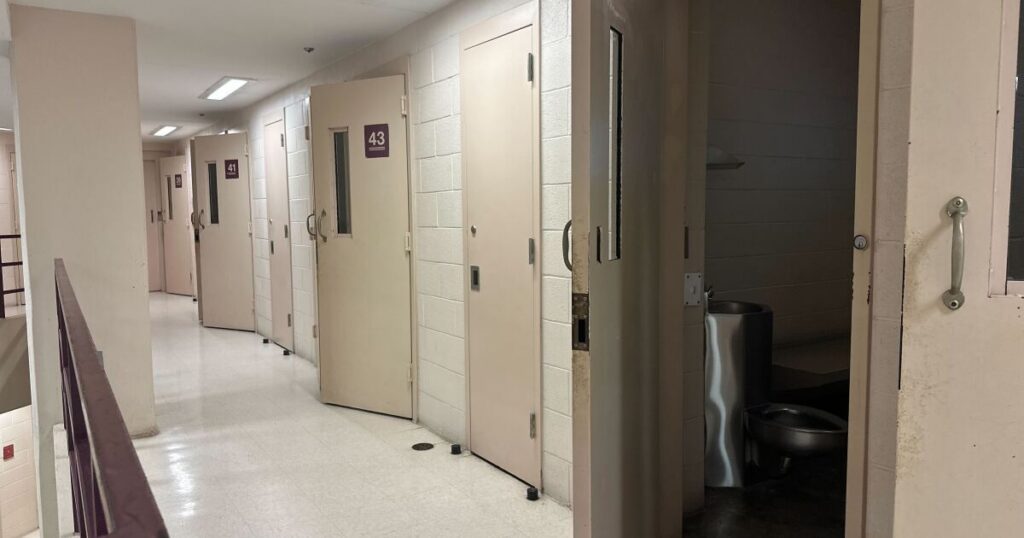
A New Initiative for Latino Inmates at Mecklenburg County Detention Center
In a unique setting within the Mecklenburg County Detention Center, a group of Latino inmates is engaging in discussions about their past decisions. These conversations are part of a new program led by Mateo Flores from the Center for Prevention Services, a nonprofit dedicated to substance use prevention tailored for Latino communities.
Since January, Flores has been conducting these classes four days a week, aiming to aid inmates in addressing substance use, trauma, and familial issues. “For them, it’s a really huge opportunity,” Flores remarked. “Not just to learn something new, but also to navigate the process of — I call them the healing process — because somehow they feel like they don’t have the right, or they don’t have the support, just because they don’t have the language.”
The initiative encompasses classes on behavioral change, parenting, and trauma recovery. Flores facilitates discussions on trauma and past experiences, helping participants recognize and learn from their actions. “We talk about trauma, difficult experiences, the reasons or the factors that they had when they did something, like a little mistake, or a huge mistake,” Flores explained, emphasizing the importance of understanding these events and planning for life beyond them.
One inmate, who has been in detention for six months, shared with WFAE how the program has illuminated the lingering effects of his childhood experiences. He noted, “I didn’t know how to control my anger. Little by little, they’re teaching us how to control ourselves, how to look at the problems we carry inside our hearts, how to express ourselves in a positive way and become better people.”
The Mecklenburg County Detention Center currently houses over 200 Latino inmates, which constitutes approximately 10% of its population. Despite offering some services to Spanish-speaking individuals, the facility previously lacked specialized programs focusing on substance use, trauma, and family dynamics.
Evelyn McGill, assistant director of detention programs, acknowledged this gap, stating, “We do recognize that there are needs with the Spanish-speaking population that we have not been able to fulfill. We thought it was important that we have a partner that could assist with that, being able to teach the classes, maybe even educating us sometimes on how best to interact.”
Flores highlights the significance of conducting classes entirely in Spanish, which fosters a trust level not easily achieved through translation. “They really appreciate the time, and with someone that can express some ideas, some methodologies in their own language,” he said. “It’s basically like the space where they say, ‘I can be and I can feel myself in here.’”
The program not only provides education but also cultivates a sense of community among its participants. An inmate noted, “Everyone shares their own experiences, and from those experiences each person learns a little more. We learn not to make the same mistakes again and to support one another.”
Detention Program Manager Arvis Williams emphasizes the long-term goal of equipping inmates with tools for life after release. “The vast majority of individuals in this facility will be released again back into the community,” Williams stated. “So it’s a question of what do you want released back to the community? Someone who was marginalized and ignored, or someone who was actually programmed, and with various programs in various languages to address the needs of our society.”