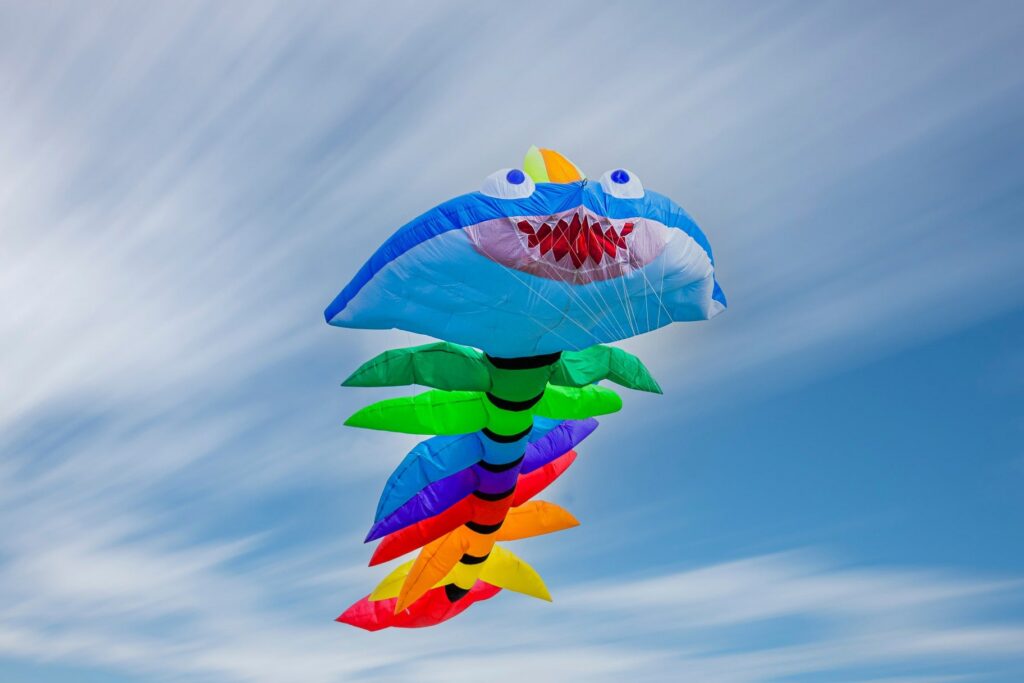
Kite flying, a colorful spectacle in the sky, unites enthusiasts across cultures and continents. Jeff Kuhns, the president of the Wisconsin Kiters Club, exemplifies this passion. He has amassed a collection of over 100 kites, including those crafted by friends in Italy.
“One of my favorites is a kite that was built by hand from friends in Italy, and so that one goes a lot of places with me,” Kuhns shared with “Wisconsin Today.”
With more than three decades of experience in kite flying, Kuhns has traversed Wisconsin and ventured into Europe, flying massive kites in Italy and France. Despite language barriers, he has forged new friendships through this universal hobby.
“I think kiting is a universal hobby that can be enjoyed without having to fully speak to one another,” Kuhns explained.
The Wisconsin Kiters Club is preparing for several events, such as the EAA Wings on Strings in Oshkosh on May 30. Additionally, June 27 will feature Kite Day in Sister Bay and the Windsor Windy Kite Festival in Dane County.
When did you realize you had a passion for flying kites?
Jeff Kuhns: Early on. Many kite enthusiasts find it as a relaxing way to pass the time on weekends and other days. You’re able to launch a kite — and if the winds cooperate — sit back, relax and either talk with friends or just enjoy the show in the sky.
What is it like at a kite flying event?
JK: The size of kite that can be flown depends on the size of the event. We have some events on very small fields, and so we don’t have an opportunity to put up the big show kites. Instead, our club will host a make-and-fly event for kids to make homemade kites. And they have an opportunity to fly them. If you’ve got a very large field, then we will have show kites that can be anywhere from 100 to 130 feet in length, and probably 30 to 40 feet in width.
How do you launch massive kites high in the air and keep them up?
JK: Those kites are staked down. The stakes are driven 3 to 4 feet into the ground — think of your big circus tent stakes. The line is reeled out downwind and the kite is brought out. Then, in all honesty, we use the wind to launch the kite up into the air. So it’s not like any time in your youth where you were running trying to get the kite up in the air.

How much impact does wind speed, weather and wind direction affect what can happen at kite events?
JK: A lot. As you would imagine, with not enough wind — lower than 5 mph — we’re using what are called ultralight kites. Stunt kites or some very, very light and delicate single-line kites can survive on light winds.
On the other hand, believe it or not, you can have too much wind for a kite. When you start getting up over 20 mph winds, most kiters will bring their kites down so as not to damage them. You have to have a little respect for the wind and nature.
For kids and adults who are new to kite flying, what are some good things to keep in mind for a successful kite-flying day?
JK: Any day out on the kite field is a great day. Regardless if you’re able to get your kite up exactly as you want it, you’re learning something from it. You’re learning more about that kite, weather conditions and what you’re doing to control it. That aggregates over time.
You gain experience to figure out what to do. That’s why kiters have so many different kites. We pack different kites depending on what conditions we expect for the day.