Efforts to Revitalize Rivercane: A Blend of Ecology and Heritage
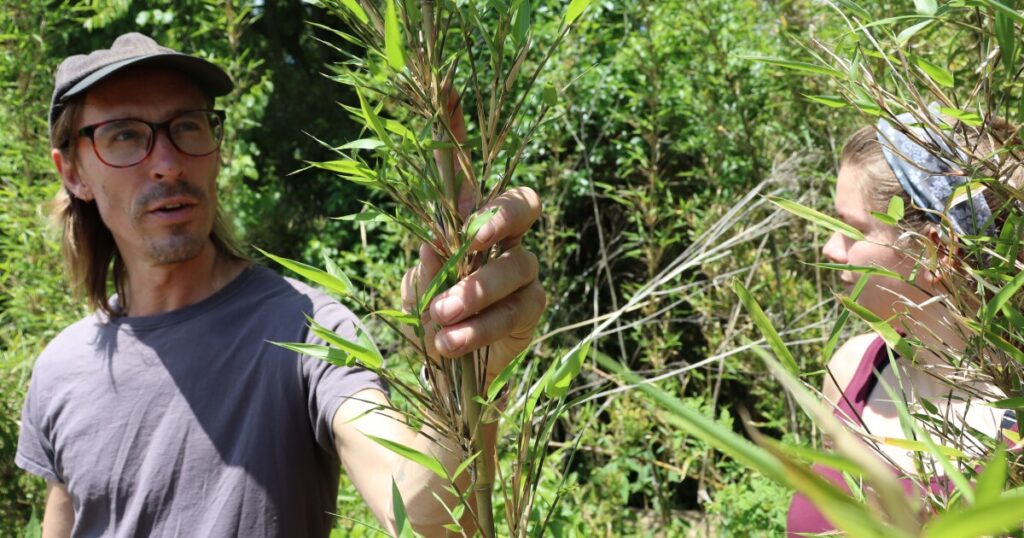
In a collaborative effort to restore the ecosystem and preserve cultural heritage, a team of six, guided by the North Carolina Department of Agriculture, recently embarked on a mission at Cane Creek in Fairview. Their task: reintroduce rivercane, a native grass species, back to its rightful place along the stream’s banks.
Rivercane, once abundant across the Southeastern United States, has seen a dramatic decline. Adam Griffith, a cooperative extension agent for the Eastern Band of Cherokee Indians, reveals that “over hundreds of years, development and agriculture led to the loss of 98% of all rivercane.” This plant, often mistaken for a weed by early European settlers, was crucial in maintaining the region’s ecological balance.
Griffith explains, “The plow took a lot of it, the mower took a lot of it,” highlighting the historical neglect that led to its near disappearance. Today, the remaining rivercane exists in small pockets, far from its former glory.
An Enduring Indigenous Tradition
For the Eastern Band of Cherokee Indians, rivercane has always been more than just a plant. It is a cornerstone of their cultural practices. Mary Thompson, a basket weaver and tribal member, notes, “We used it for housing, for roofing, for toys, for musical instruments, for weapons, for storage, vessels, basketry.” However, accessing this essential resource has become increasingly difficult, forcing her to travel far distances to source it.

A Post-Helene ‘Powerhouse’
At Warren Wilson College, students like Tim Comstock are embracing the resilience of rivercane through a project aimed at restoring it along the Swannanoa River. Comstock is inspired by the plant’s durability, stating, “The river can rise as much as it wants and the river cane doesn’t care. It stays intact.” This initiative, supported by the Eastern Band of Cherokee and Riverlink, is part of a broader effort to leverage rivercane’s ecological benefits.

Despite the enthusiasm, challenges persist, particularly in sourcing enough rivercane to meet demand. The project team is exploring innovative propagation methods to overcome this hurdle, aiming to enhance the stability of riverbanks and contribute to ecological restoration efforts.
Through these initiatives, rivercane may once again play a crucial role in both environmental conservation and cultural preservation.