In a pivotal move to enhance its water infrastructure resilience, Asheville is embarking on a significant upgrade nearly two years after Hurricane Helene disrupted its water supply, affecting 160,000 residents. This initiative is aimed at preventing future outages and improving the city’s capacity to handle natural disasters.
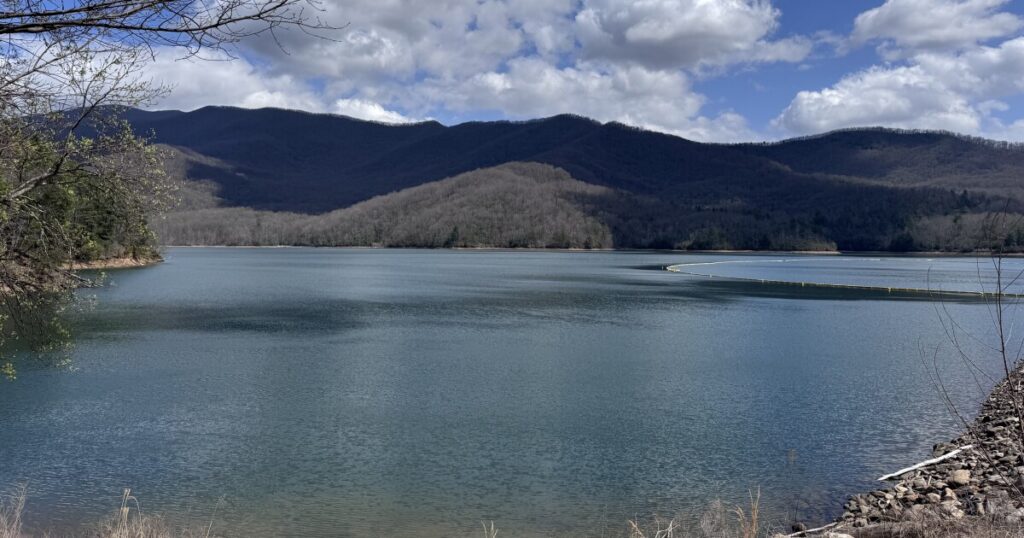
With financial backing from FEMA’s Public Assistance program, Asheville is investing $25 million in a water pre-treatment facility at the William Debruhl Water Plant located in Swannanoa. The city also seeks an additional $260 million from FEMA for extensive enhancements at North Fork Reservoir, the primary water supply plant for the city.
Bill Hart, Water Resources Director for Asheville, emphasized the focus on bolstering the water system’s resilience against climate-induced events like floods and landslides. “A lot of the actions that we continue to take are as a result of Hurricane Helene,” he stated to BPR. “A lot of the projects we’re looking at right now and a lot of work we’re doing is for resilience and for recovery. We want to make sure that our future is a bright one.”
Hurricane Helene, late in 2024, exposed critical weaknesses in Asheville’s water facilities, particularly at North Fork and William Debruhl, which lacked pre-treatment systems. This deficiency meant that the city faced significant delays in filtering sediment-laden water, as turbidity levels needed to drop significantly before treatment could resume.
The approved upgrade at William Debruhl aims to mitigate this issue by ensuring continuous operation regardless of water quality. The plant, which supplies around three million gallons daily, will benefit from enhanced treatment capabilities. “What this does is it ensures that the William Debruhl Plant will be able to run no matter what the water quality is,” Hart said. “They’ll be able to treat the water and to stay in operation.”
FEMA will cover 75% of the project’s $25 million cost, with construction anticipated to commence next spring and span approximately two years.
Asheville’s $260 Million Proposal for North Fork Enhancements
Asheville is finalizing plans to secure $260 million through FEMA’s Hazard Mitigation Grant Program for improvements at North Fork. Key projects include a $125 million pre-treatment system and a $135 million alternative bypass line to support the main transmission line, which was compromised during Helene.
The current bypass, repaired post-Helene, is situated near the Swannanoa River, rendering it vulnerable to future flood risks. The city plans to construct a new bypass outside the floodplain to ensure sustained water delivery.
While these projects are in the design phase, Asheville is investing substantial resources with expectations of FEMA’s approval and subsequent reimbursement. Pre-treatment and bypass designs cost roughly $6.7 million and $10.7 million, respectively.
Upon reaching 60% design completion, Asheville will submit its hazard mitigation applications. FEMA grants will cover 75% of project costs, requiring city or state funding for the remaining expenses. The city has allocated $125 million from a $225 million CDBG-DR grant for these infrastructure upgrades.
Hart expressed confidence in receiving FEMA’s support for the initiatives, acknowledging the collaborative efforts of local and federal representatives. “Senator Budd’s office and Senator Budd have been instrumental in helping us with a lot of the work we’ve been doing and a lot of the funding,” he noted. “Our mayor has been tireless in her work to go down and get funding through both Raleigh and Washington. It has been a very good collaborative effort with a lot of work done.”