Georgia Advances Redistricting Efforts Amid Southern States’ Electoral Changes
In a significant political maneuver, Georgia is taking proactive steps to address redistricting for future elections. This move comes as Republican senators in Louisiana push to reduce majority-Black U.S. House districts, a plan that aligns with recent Supreme Court decisions impacting minority districting rights.
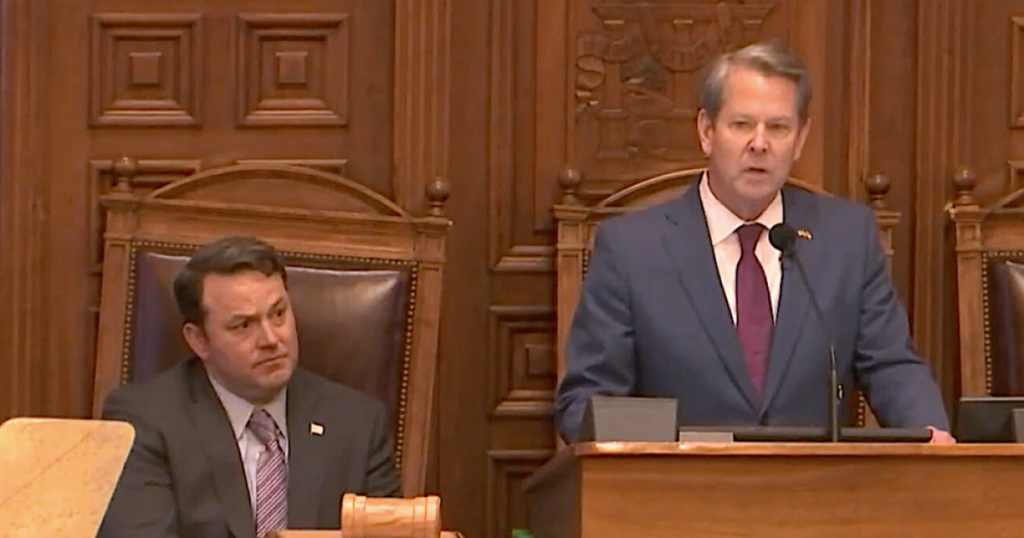
Georgia’s Governor, Brian Kemp, has initiated a special legislative session scheduled for June 17 to discuss redistricting strategies. This session aims to reshape voting districts for the 2028 elections, setting Georgia apart as the first state to address upcoming elections in response to the Supreme Court’s ruling against Louisiana’s Black-majority district.
The decision to focus on the 2028 elections, rather than immediate changes, is strategic. Governor Kemp has emphasized the importance of maintaining current districts for this year’s elections, given that ballots are already in circulation for the primaries.
With the Supreme Court invalidating Louisiana’s district as an “illegal racial gerrymander,” Georgia’s Republican legislators are poised to act. The urgency stems from the potential of a Democratic victory in Georgia’s upcoming gubernatorial race, which could lead to a veto of any newly proposed districts if delayed until the regular session.
Georgia’s legislative focus includes not only U.S. House districts but also state Senate and House boundaries. A court mandate previously required revisions to some state districts to enhance Black voters’ electoral influence, nullifying a GOP-drafted map post-2020 Census. The current political climate may tempt Republicans to revisit or intensify these mapping strategies, particularly as their majority in the 180-member state House has dwindled to 99 seats.
Five of Georgia’s 14 congressional seats are held by Black Democrats, with U.S. Rep. Sanford Bishop’s southwest Georgia district potentially under scrutiny for change. Additionally, the Atlanta area, represented by four Democratic members, could face redistributions, though such changes risk increasing competition in traditionally Republican areas.
Opposition to these plans is vocal. Democratic U.S. Senator Raphael Warnock has declared his intent to challenge the redistricting efforts, stating: “There is an extreme movement in this country that will stop at nothing to hold on to power, even if it means stripping representation away from millions.”