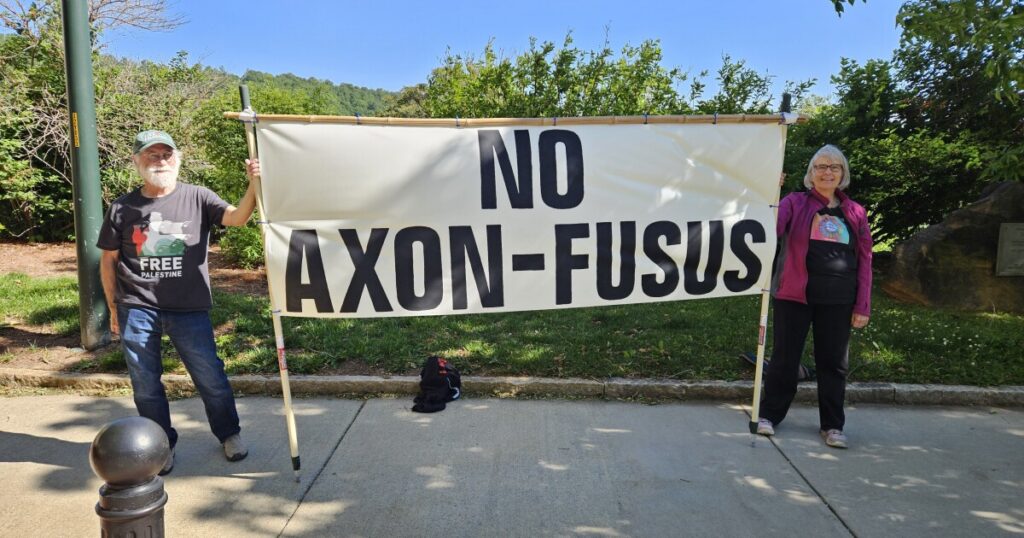
Asheville’s City Council meeting stretched late into the evening, drawing significant attention from residents concerned about a recent decision. The council approved a federal grant of $1.14 million for the Asheville Police Department, intended to establish a real-time intelligence center (RTIC) for enhanced surveillance capabilities across the city.
Despite extensive public opposition, the council voted to accept the funding, with only Council member Kim Roney dissenting. The decision was met with vocal disapproval from attendees, who expressed concerns about potential infringements on civil liberties and insufficient data protection measures.
Months of debate preceded this vote, as the proposal had been postponed from the previous month due to similar public outcry. Critics argued that the RTIC could threaten privacy rights and lack transparency, despite council efforts to reassure the public with an additional resolution affirming civil liberty protections.
Jessica Myers, among other speakers, pointed out the resolution’s lack of enforceability, expressing doubt about the city’s ability to safeguard the data from misuse by federal agencies or technology providers. “We aren’t protected by any of the policies you think we have. We aren’t protected by civil liberties statements,” she stated.
Interim Police Chief Jackie Stepp defended the RTIC by highlighting its potential to enhance crime investigations using AI to scan for weapons and identify suspects, while affirming that facial recognition would not be employed. She also shared endorsements from Buncombe County District Attorney Todd Williams and Russ Ferguson, the U.S. Attorney for the Western District of North Carolina.
Stepp assured the community of ongoing engagement through an “education campaign” and noted that the RTIC could be operational by January.
Asheville’s Fiscal Year 2026-27 Budget
City Manager DK Wesley proposed a new budget plan for the 2026-27 fiscal year earlier in the council meeting. The proposal includes a property tax increase of 4.95 cents per $100 valuation to address a previously anticipated $30 million budget gap. This increase will affect properties reassessed recently, like a $500,000 home, which could see a tax hike of about $345 annually.
Wesley described this budget as both balanced and disciplined, aiming to make strategic investments while acknowledging existing financial challenges. The budget factors in increased debt service, city employee healthcare and retirement costs, a salary cost-of-living adjustment, but also includes cuts to some services.
A public hearing on the proposed budget is slated for May 26, with a final vote scheduled for June 9. Details on the budget process are available online.
Additional Information
Regular meetings of the Asheville City Council occur bi-monthly on the second and fourth Tuesdays at City Hall. The next session will be held on May 26. For more information, refer to the full meeting recording and related documents from the May 12 meeting.