Georgia’s Shift to Nonpartisan Local Elections Sparks Legal Controversy
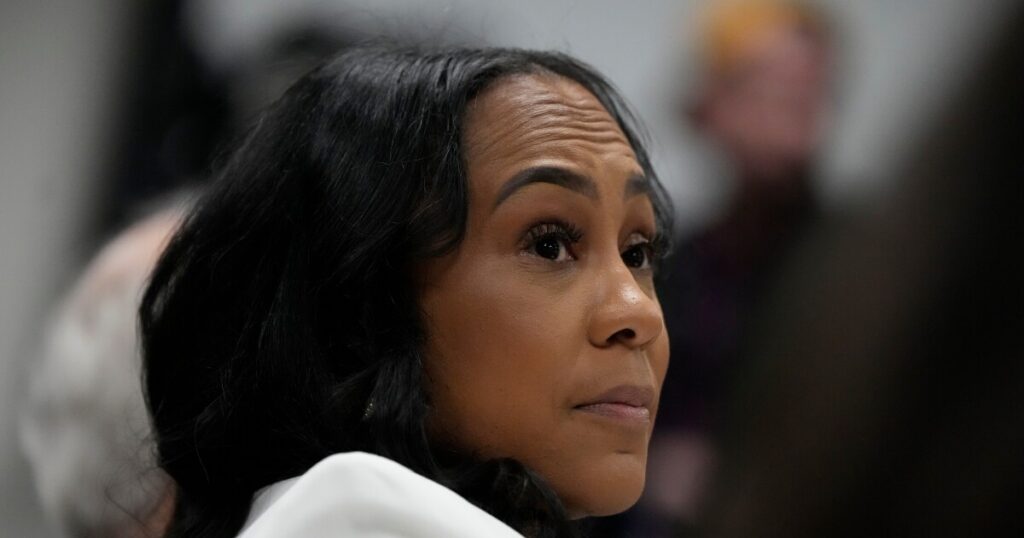
In a move that has stirred significant debate, Georgia’s Governor Brian Kemp has enacted legislation mandating nonpartisan elections for local officials in Atlanta’s five largest counties. This decision has prompted strong opposition from local Democratic prosecutors, including Fulton County District Attorney Fani Willis, who argue that the law is unconstitutional.
Kemp’s signing of the bill, which occurred privately on the last allowable day of Georgia’s 2026 legislative session, has been perceived by some as a strategic maneuver. The bill’s critics argue it is a direct response to Willis’s legal actions against former President Donald Trump regarding his attempts to challenge the 2020 election results in Georgia.
Fani Willis, alongside DeKalb County District Attorney Sherry Boston, expressed their intention to contest the bill through legal channels. They issued a joint statement on Tuesday describing the legislation as a “blatant attempt by Republicans to give their candidates an edge in Democratic counties by hiding their party affiliation from voters.”
The bill, advocated by State Sen. John Albers, a Republican from Roswell, is designed to enhance public safety, according to Albers. The legislation, effective in 2028, maintains partisan elections for sheriffs but shifts other local official elections to May. This change coincides with the nonpartisan judicial elections, potentially reducing voter turnout compared to the general elections held in November.
This legislative change affects Fulton County, the heart of Atlanta, and its suburban counterparts: Clayton, Cobb, DeKalb, and Gwinnett counties. Historically, these areas have shown a strong Democratic preference, with Cobb and Gwinnett counties transitioning from Republican strongholds to Democratic supporters since 2016.
Detractors of the law suggest that by removing party labels, Republican candidates might gain an advantage in these Democratic-leaning areas. There is a call among critics for the policy to apply uniformly across all 159 counties in Georgia, rather than selectively targeting urban Atlanta.
Willis and Boston have also highlighted a potential racial and gender bias in the legislation, noting that both Fulton and DeKalb counties have elected Black women as district attorneys. This law is seen as part of a broader Republican strategy targeting district attorneys, with Fani Willis often in the crosshairs.
The District Attorneys Association contends that the new law cannot alter the partisan nature of district attorneys, as they belong to the state judicial branch rather than county offices. It argues that a constitutional amendment, requiring a two-thirds majority in the General Assembly, would be necessary for such a change, a threshold that Democrats could potentially block.