Education Grants and School Improvements Under Scrutiny in Nebraska
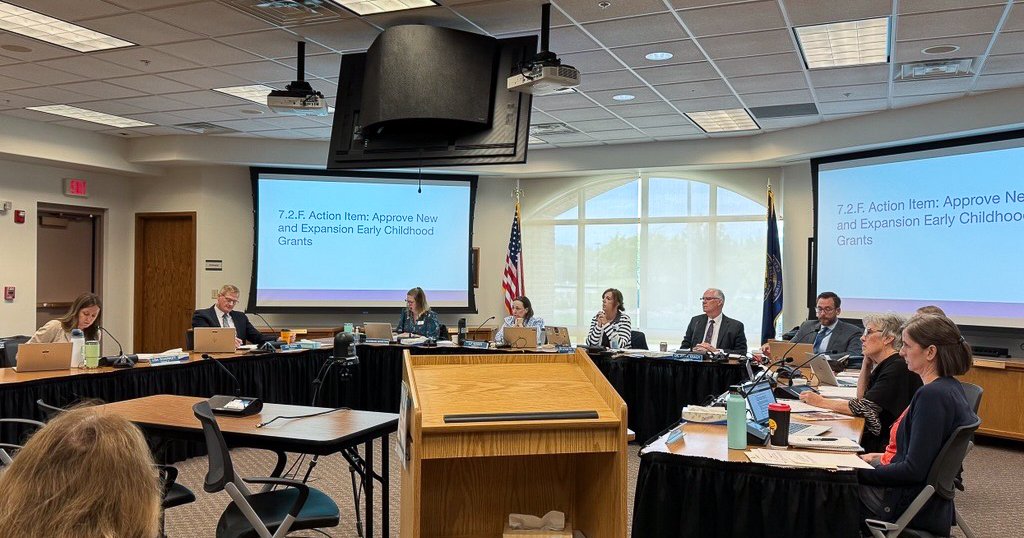
In a closely contested decision, the Nebraska State Board of Education has approved funding aimed at enhancing literacy and expanding preschool opportunities. This decision, reached with a 4-3 vote, reflects ongoing debates about the allocation and impact of educational grants across the state.
Federal Literacy Grant Distribution
The Comprehensive Literacy State Development grant, a federal initiative from the Department of Education, allocated $55 million to Nebraska in 2024. These funds are intended to support professional development and provide instructional materials over five years. In the recent board meeting, the third year of these grants was approved, benefiting 46 subgrantees, including various school districts and educational service units.
Board member Elizabeth Tegtmeier, representing western Nebraska, expressed concerns over the distribution of these funds, emphasizing that not all school districts were benefiting. “I was told, that with our literacy project and our funding, that we would be having all 23,000 of our teachers trained in evidence-based reading instruction,” Tegtmeier said. “I believe that the current plan to use the funds is too narrow to accomplish that.”
Allyson DenBeste from the Nebraska Department of Education clarified that many districts applied through educational service units to streamline the rigorous application and reporting processes. “Many of our small districts chose to apply as a part of a consortium with their ESU as the fiscal agent and managing the application,” DenBeste explained.
Early Childhood Program Funding
In addition to literacy grants, the board also approved funding for early childhood programs. About $2 million was earmarked for 30 schools under an existing grant program, while approximately $1 million was allocated for new or expanding programs across eight districts. The districts involved include Chase County Schools, Fullerton Public Schools, and others, aiming to establish new classrooms or expand existing ones.
Debate arose over the necessity and financial burden of these preschool programs. Board member Sherry Jones argued against taxpayer funding for preschool, citing no constitutional requirement for education prior to age five. Similarly, Lisa Schonhoff questioned the expansion amid taxpayer concerns, asking, “By expanding high-cost programs for those under five, are we placing an unconstitutional extravagant burden on the backs of hardworking taxpayers?”
Conversely, Liz Renner supported the grants, highlighting their broader benefits beyond academics and asserting the importance of supporting families to retain community members. “I also want to say that the high-quality early childhood education isn’t just about setting people up to be education commissioners,” Renner noted.
Priority Schools Identified
The board also designated three high schools—Omaha Northwest High School, Bayard Secondary School, and Scribner-Snyder Secondary School—as priority schools, requiring an improvement plan and regular check-ins with the Nebraska Department of Education. This decision, part of a statutory requirement, brings the total number of priority schools to six.
Board member Schonhoff suggested future focus on elementary and middle schools, citing resource challenges in elevating high school students from lower reading levels.
The board concluded with the acceptance of a state audit of the Nebraska Department of Education without discussion. The audit, conducted by the state auditor, raised questions about financial decisions, including the repayment of state aid by three school districts.
The next board meeting is scheduled for June 5.
This story was corrected to clarify that The Buffett Early Childhood Institute, Nebraska Children and Families Foundation, and Educare are nonprofits.