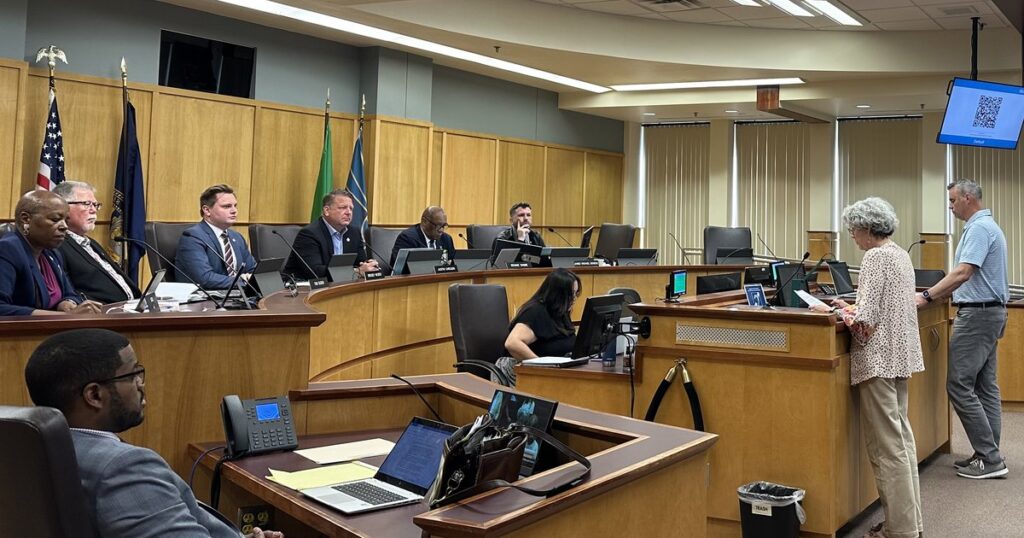
A significant number of Lincoln residents gathered at the City/County chambers on Monday, eager to voice their opinions on a proposed ordinance to uphold a $15 minimum wage within the city limits.
Addressing the crowd of 36 attendees, Councilman James Michael Bowers emphasized, “This is not just an economic argument, it’s a question of whether voter’s votes matter.”
Many of those present expressed strong support for the ordinance, introduced by Bowers, with discussions largely centered on safeguarding fair wages for young workers. This issue has come to the forefront since the passage of LB258 in the last legislative session.
LB258 established a maximum annual increase of 1.75% for the minimum wage and introduced lower wage rates for teenagers aged 14 to 15, as well as a temporary training wage for those aged 16 to 19. Despite state guidelines, the city retains the power to set a higher minimum wage.
The speakers included a diverse group: teenagers potentially affected by lower wages, parents advocating for their children, and representatives from nonprofit organizations.
Jiromi Corona, chair of the Lincoln Youth Action Board, highlighted the challenges faced by young people in precarious situations due to reduced wages. “I am outraged. Are youth and young adults not equal to everyone else?” Corona questioned, advocating for the ordinance and emphasizing the difficulties faced by homeless youth.
Support came from various organizations such as the League of Women Voters of Lincoln/Lancaster County, Nebraska Appleseed, Mental Health Association of Nebraska, and Bridges to Hope.
Voices for Children in Nebraska, a nonprofit focusing on youth issues, also backed the ordinance. “Wages aren’t about convenience, they’re about survival,” stated Eric Reiter, advocacy and community collaborations coordinator for the organization.
Senator Danielle Conrad of Lincoln, a known supporter of the ordinance, attended to advocate for its passage, stating, “There is no specific preemption on the books in Nebraska that would prevent a community from setting a wage standard that’s right for them.”
Out of the 36 participants, only two organizations voiced opposition to the ordinance.
Mark L’Heureux, executive director of schools and facilities for Christ Lincoln Schools, urged the council to reject the ordinance, citing financial strains that increased wages could impose on the institution, which has already raised tuition by 10% on average.
The Lincoln Independent Business Association, represented by President Lincoln Zehr, also opposed the measure, warning of potential negative impacts on small businesses. “Small businesses, especially those who operate on thin margins, are disproportionately affected,” Zehr explained.
The City Council is set to vote on the ordinance next week, with Mayor Leirion Gaylor Baird expressing her support. “Lincolnites spoke with a decisive voice by overwhelmingly approving Initiative 433 to raise the minimum wage in Nebraska,” she stated, affirming her intent to sign the ordinance if approved.