The Michigan Senate has taken a significant step by approving the remaining proposals for the upcoming state budget. This includes a comprehensive $25 billion allocation aimed at enhancing K-12 education, colleges, and universities, which includes a notable increase in per-student funding by approximately $250. Additionally, the plan covers free school meals, $300 million for mental health and school safety initiatives, and $235 million dedicated to improving children’s literacy.
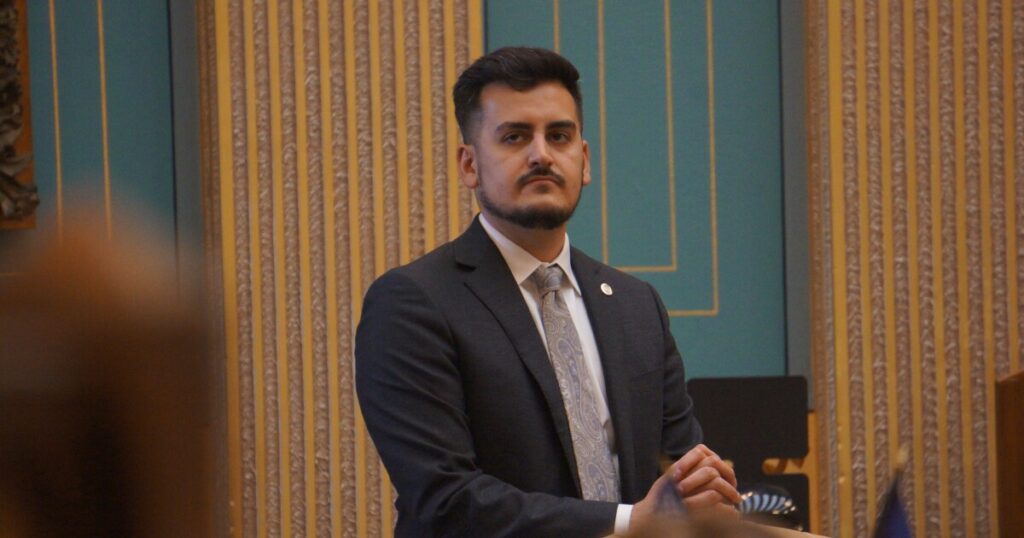
Senator Darrin Camilleri (D-Trenton), who leads the budget subcommittee responsible for the K-12 school funding proposal, emphasized the budget’s broader implications. “We are sending a clear message to every student, every parent, and every teacher in Michigan. We hear you and we are investing in you. This budget is not just a spreadsheet of numbers. It’s a statement of values,” Camilleri articulated during a Senate session.
A notable feature of the plan is the revised funding model for at-risk and bilingual education, offering schools increased funding based on the number of at-risk students they serve. Camilleri described it as a “15-year plan” designed to incrementally enhance funding for at-risk students, ensuring a sustainable path towards fully funding these weights within 15 years.
While the proposal gained some bipartisan support, with a few Republicans backing the weighted funding approach, it also faced criticism for allegedly being expedited and not adequately addressing special education needs. The education budget itself passed strictly along party lines.
Republican Senator Lana Theis (R-Brighton), serving as the minority vice-chair for Camilleri’s subcommittee, criticized the budget for lacking accountability and misallocating funds. She highlighted concerns such as substantial cuts to cyber school students’ funding and the exclusion of non-public schools from safety and mental health funding. “This budget hurts cyber school students by cutting funding by over $1,800 per child and excludes non-public schools from school safety and mental health funding. Michigan has increased spending on public K-12 schools by almost 60% over the last decade, yet student performance continues to decline,” Theis remarked.
Democrats countered that the increased spending is essential to counteract years of underinvestment in education. Camilleri argued that cyber schools require less operational funding compared to traditional schools.
The budget discussion is still in its early stages, with the Democratic-controlled Senate needing to reconcile differences with proposals from the governor’s office and the Republican-led House. The House’s version allocates approximately $24.1 billion for education, also proposing a $250 per-student funding increase, but without the Senate’s adjustments for at-risk funding.
Discrepancies also exist in funding for Michigan’s largest universities, with the House suggesting a significant reduction in state operational funding for Michigan State University and the University of Michigan Ann Arbor campus, while the Senate proposes a modest increase.
In addition to the education budget, the Senate approved a supplemental budget for the current fiscal year, totaling $1 billion. The passing of this bill also followed party lines.
Republicans expressed concern over the timing of funding for runway repairs at the Selfridge Air National Guard base, arguing that it should be prioritized over other expenditures. Senate Minority Leader Aric Nesbitt (R-Porter Twp) voiced opposition, stating, “Senate Democrats want to hold Selfridge hostage. But for what, you ask. In exchange for more pork-filled Democrat spending.”
Despite Republican objections, Democrats maintain that the proposal ensures timely funding for the base while addressing critical state needs. Senate Appropriations Committee Chair Sarah Anthony (D-Lansing) defended the spending, emphasizing investments in infrastructure and public health. “Key protections for Michigan’s families’ safety and health by investing in lead service line replacements as well as clean drinking water and wastewater infrastructure grants,” Anthony stated.
The supplemental budget now awaits approval from the House of Representatives to move forward.