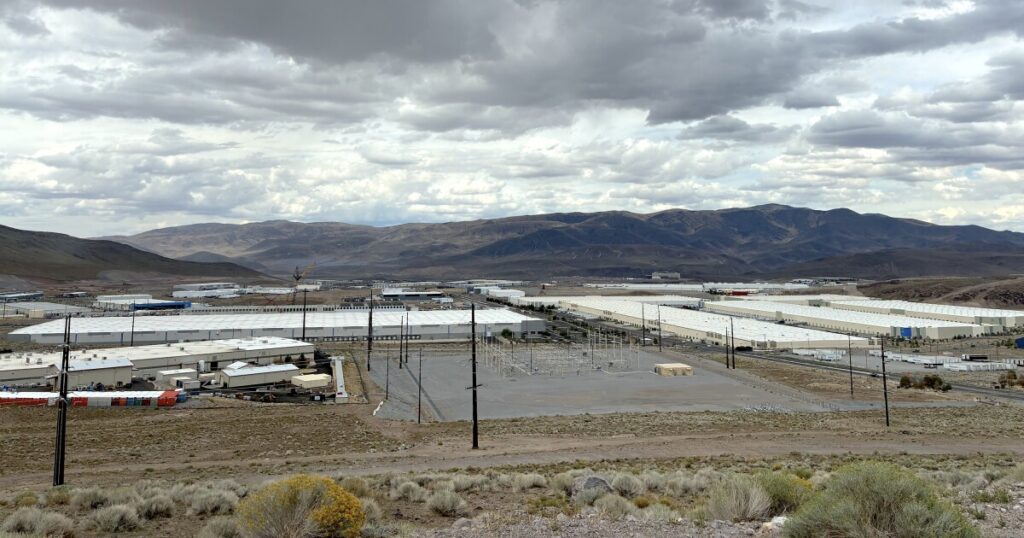
The landscape of data center construction in the United States is undergoing a transformation, driven by the increasing demand for artificial intelligence and cloud computing. These technological advancements are necessitating significant energy, water, and infrastructure investments.
According to Pew Research Center, approximately 1,500 new data centers are currently in various stages of planning or development across the nation. Notably, nearly 40% of these upcoming projects are planned for areas that currently lack such facilities, indicating a shift from traditional urban and suburban locations.
Aaron Smith, head of Pew’s Data Labs team, notes that “about 90% of the data centers that are currently operational in the country are in urban or suburban areas.” This trend is gradually extending to the Mountain West region.
In the Mountain West, existing data centers are predominantly situated in states like Arizona (157), Nevada (69), Colorado (56), and Utah (42), with smaller numbers in Wyoming (30), Montana (27), New Mexico (22), and Idaho (17).
However, the majority of new constructions are primarily concentrated in the South and Midwest, particularly in Virginia and Texas. Despite this, the Mountain West is beginning to experience a similar trend.
New proposals for data centers in places like Reno, Denver, and Phoenix are facing opposition. Concerns primarily revolve around the substantial water and energy consumption, as well as potential noise and air pollution impacts.
Pew researchers have observed that while public awareness of data centers is generally low, this might change as more projects are proposed, especially in areas unfamiliar with hosting such facilities.
This article was crafted by the Mountain West News Bureau, a partnership between several regional public media outlets and NPR. The initiative receives partial funding from the Corporation for Public Broadcasting and Eric and Wendy Schmidt.