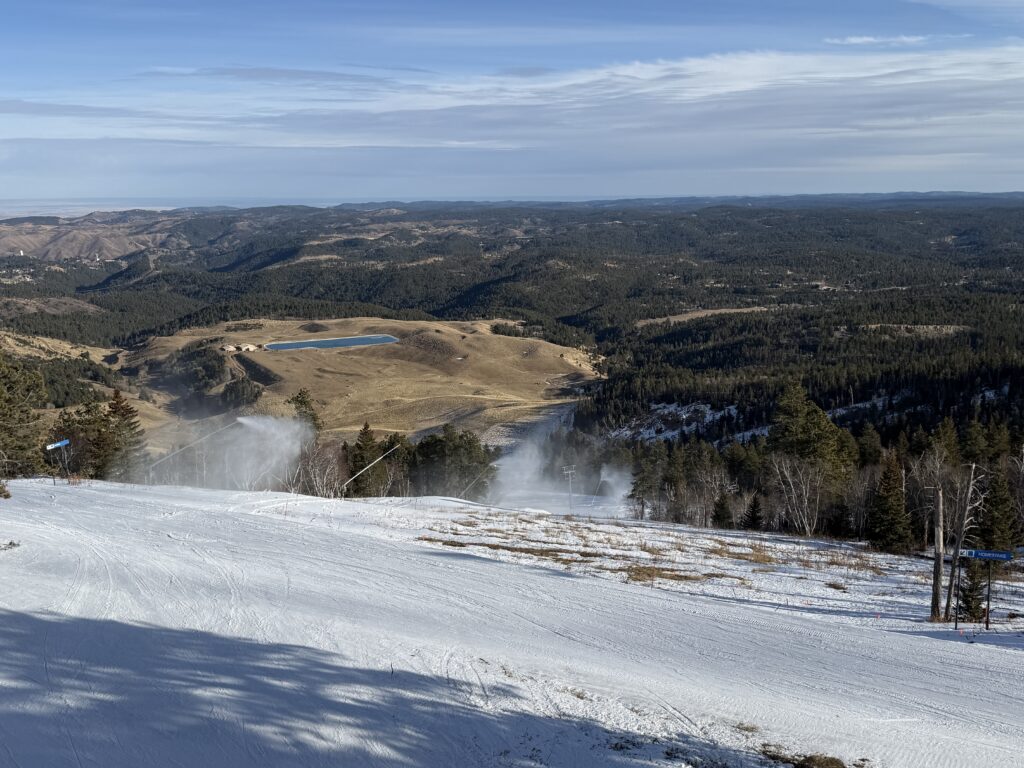
Amidst a backdrop of brown, dormant grass, Terry Peak stood out as an artificial patch of white this winter. The Black Hills endured one of its driest and warmest winters on record, according to state climatologist Laura Edwards. “You see a lot of top 10s across South Dakota, essentially,” said Edwards, highlighting the unusual weather patterns. Winter in the Black Hills is crucial for the local economy, especially during tourism’s offseason.
Snowfall in the northern Black Hills was about 8 feet below average from October to early April, while other areas saw a shortfall of 2-3 feet. This lack of snow significantly impacted businesses reliant on winter recreation, such as downhill skiing, snowmobiling, and cross-country skiing. With warmer winters anticipated, businesses are forced to adapt. In Lawrence County, trends show decreasing winter precipitation and rising temperatures, with winter temperatures now averaging 4 degrees Fahrenheit higher than in the late 1800s, according to data from the National Centers for Environmental Information.
$6.5 million investment keeps ski area open
This winter posed one of the “most challenging” seasons in 38 years for Terry Peak, according to Marketing Director Linda Derosier. Despite brown grass elsewhere, Terry Peak maintained snow thanks to a $6.5 million investment in snowmaking systems over the past two years. The enhancements tripled snowmaking capacity, allowing operations to continue while many U.S. resorts closed early due to insufficient snow. Derosier noted that visitors were impressed by the resort’s reliable conditions, making them more likely to return.
Cross-country skiing, snowmobiling nearly nonexistent
Recreational Springs Resort suffered from the lack of snow, as snowmobiling and cross-country skiing were nearly impossible without natural snowfall. Owner Brent Eslinger noted the cancellation of the annual Deadwood Snocross National due to snow shortages, though a vintage snowmobile club gathering proceeded without rides. Eric Anderson from the Black Hills Nordic Ski Club reported grooming trails just three times this season, far below the usual 30 to 40. Without winter recreation, Eslinger emphasized the need to attract visitors through ATV rentals and events like weddings to sustain his business.
Economic, visitor impact
Warm, dry conditions also led to the cancellation of other winter events in the Black Hills, such as Chinook Days and the Burning of the Beetle. Visitor spending varied across the region, with Meade County seeing declines but Pennington County posting gains. Michelle Thompson, of the Black Hills and Badlands Tourism Association, noted that businesses not reliant on snow benefited from the milder weather, with increased access to trails and attractions. Despite a 0.8% dip in visitor trips, spending rose by 1.7%, underscoring the region’s adaptability.