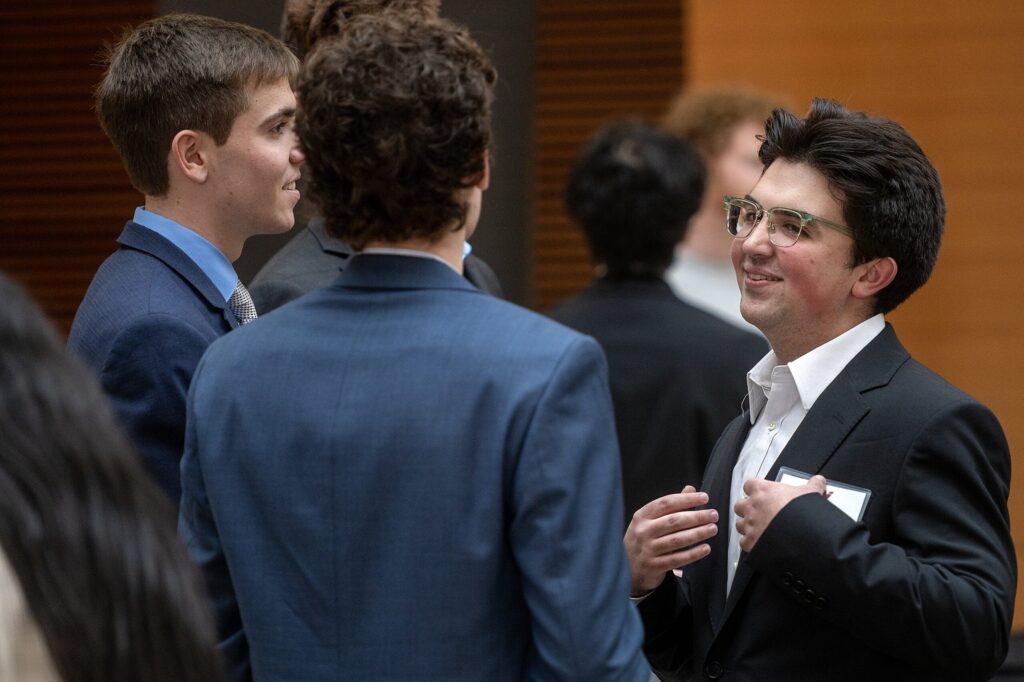
As graduation approaches at the University of Wisconsin-Madison, students like Carlos Bello find themselves navigating a challenging job market. Despite sending out numerous applications, Bello, an international business major, remains without a job offer, reflecting a broader trend facing new graduates.
Bello, who minored in sports communications and interned with both the Milwaukee Bucks and the National Hockey League, is focusing his job search on the sports entertainment and consulting industries. However, his efforts have yet to yield success. At a recent consulting competition, he shared his insights with WPR, stating, “It’s really about who you know and how you sell yourself in resumes and interviews.”
The current job market is being described as the toughest since the COVID-19 pandemic, with experts pointing to a slowdown in hiring. Nicholas Jolly, a labor economist from Marquette University, notes that the labor market now is “not nearly as hot” as it was immediately post-pandemic. “We had a very tight labor market post-pandemic. It’s now softened as markets have adjusted,” Jolly explained.
Unemployment rates remain low, recorded at 4.3 percent nationally in March and 3.4 percent in Wisconsin in February. However, job openings have dropped significantly since their peak in 2022. As the job market cools, employers are raising the bar for entry-level positions, making it harder for new graduates to meet “the minimum qualifications,” Jolly noted.
Market Cooling and Future Prospects
Economists also attribute the labor market’s softness to uncertainties such as shifting tariffs, immigration policies, and geopolitical instability. John Nunley, an economics professor at UW-La Crosse, remarked, “When you can’t predict the future, or you’re very uncertain about it, you tend not to do anything.” Though the current outlook seems bleak, the National Association of Colleges and Employers anticipates a 5.6 percent increase in hiring for new college graduates this year, suggesting potential improvement.
The Role of Artificial Intelligence
Artificial intelligence (AI) is another factor experts are watching, though its impact on hiring remains uncertain. Jeff Palkowski of the Wisconsin Society for Human Resource Management Council noted, “I don’t know that it’s made a huge impact yet, but I think it’s something that’s on the horizon.” While AI is reshaping job application processes by helping candidates tailor materials, its long-term effects on employment are yet to be seen. Familiarity with AI is becoming a sought-after skill, as indicated by a rise in entry-level jobs requiring AI knowledge.
Laurie Marks from the UW-Milwaukee Center for Student Experience and Talent emphasized the importance of experiences outside the classroom. “The graduates who thrive in the labor market right when they leave are the ones who engage… in internships and project-based work,” she said.
Experiences of Current Students
The Wisconsin Invitational Consulting Case Competition saw participation from students nationwide, some of whom have secured positions while others continue their search. Paul Oh from the University of Washington Bothell has applied for about 20 jobs but remains optimistic. “I think there are still opportunities out there,” he said, despite hearing of hiring freezes from peers.
Conversely, Jai Kozar-Lewis from Michigan State University secured a job with Boston Consulting Group following an internship. “Honestly, it is such a relief not to have to recruit,” he said, acknowledging the current job market’s difficulties. Despite the challenging environment, students like Bello remain hopeful. “If I do graduate without a job, I won’t feel worse about myself,” Bello shared, expressing confidence that opportunities will eventually arise.