The Timeless Allure of Mah-Jongg: A Social Phenomenon in NEPA
Amidst the digital age, a classic game is resurging in popularity, offering a refreshing break from screens. Mah-jongg, a game rooted in tradition and community, is captivating people across generations, especially in Northeast Pennsylvania.
Lexie Kelly’s journey with mah-jongg began a decade ago at the Abington Community Library. “I purchased a book and then my friends got involved, and we all sort of learned it together,” she recalls. It took her two years to master the intricacies of this tile-based game.
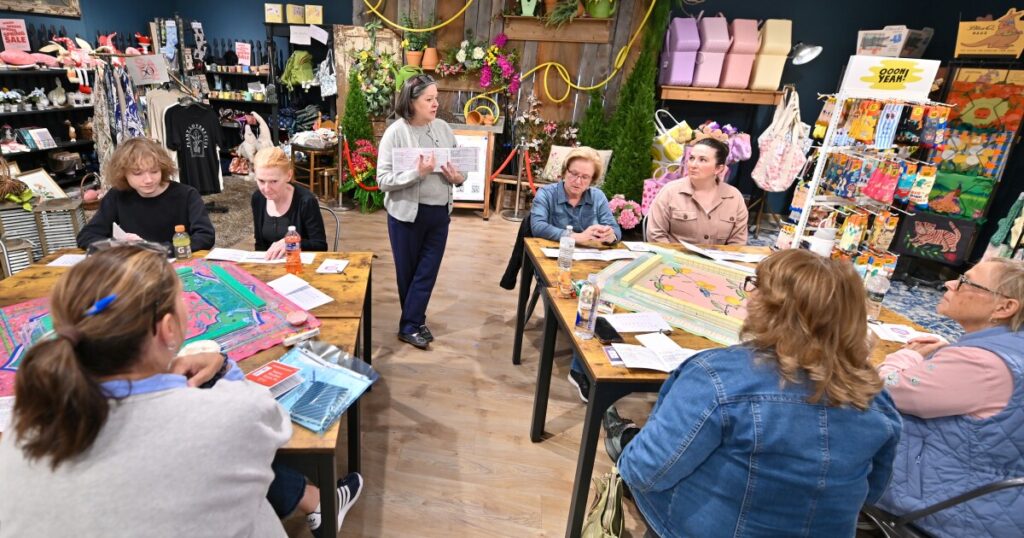
Fast forward to today, Kelly, alongside Laurie Gumula, has founded the Mah Jongg Social Club of NEPA. This club not only provides a platform for socializing but also offers an escape from the digital noise. “You’re not on your telephone, you’re not on social media,” Kelly emphasizes as she sets up for a teaching session at Corky’s Garden Path in Scott Twp., Lackawanna County.
The duo, when not teaching, plays every Wednesday night, sharing life’s milestones and challenges. “We’ve seen our kids apply to college, graduate from high school, graduate from college. We’ve been through that,” Kelly and Gumula shared. “We’ve lost our parents. We’ve had a couple of divorces. I mean, it’s all about supporting one another and there’s a benefit to that, health wise, when you are socializing too.”
NPR highlights the game’s growing appeal, particularly among Gen Z and Millennials. Eventbrite data shows a 179% increase in mah-jongg events from 2023 to 2024, as reported by the Associated Press. This trend is evident in NEPA, where the club’s first tournament attracted 40 players.
The Basics of Mah-Jongg
Mah-jongg, known for its ornate tiles and colorful mats, is played with 152 tiles divided into three suits—bams, cracks, and dots—along with directional tiles spelling NEWS, and various honor suits. “You break the wall like you would break a deck of cards, and each player gets 13 tiles,” explains Kelly. The goal is to form a complete set of 14 tiles, or mah-jongg.
According to Kelly, the key to mastering the game is practice. “It’s all about practice. And the more you practice, the more accustomed you get to recognizing the tiles and the patterns and the suits, and the faster your mind can organize it,” she states. The National Mah Jongg League releases a card each year with 55 winning hands, though Kelly notes there are 1,000 different ways to win.
Historical Roots and Modern Day Appeal
Originating in China in the 1800s, mah-jongg was introduced to the U.S. by Joseph Park Babcock in 1920. The game spread from San Francisco to New York and Florida, but lacked standardized rules. In 1937, the National Mah Jongg League was formed to address this, fostering a community of women supporting women. Kelly, a history enthusiast, sees parallels between today’s resurgence and the past. “Whether the common denominator is COVID versus the 1918 influenza, I don’t know,” she reflects. “But the same thing is happening today.”
The Mental Challenge
Mah-jongg is more than just a game; it’s a mental workout. Kelly points out its benefits for cognitive health, especially in combating dementia. Kiernan Riley, a participant in a club tournament, describes it as “brain bending.” She finds the mental challenge rewarding, saying, “It makes it hard to learn. So I feel like the more I learn, the more I’m like, accomplishing everything.” The social club hosts open play nights monthly, fostering connections among players of all ages.
For those eager to join the mah-jongg community, the Mah Jongg Social Club of NEPA offers regular events. Other opportunities can be found at local libraries and community centers, where the game’s timeless appeal continues to bring people together.