Racial Disparities in Wisconsin’s Prison System Highlighted by New Report
In a startling revelation, a recent report by the Wisconsin Policy Forum sheds light on the significant racial disparities within Wisconsin’s prison system. The findings indicate that racial inequalities in incarceration rates are among the most pronounced in the United States.
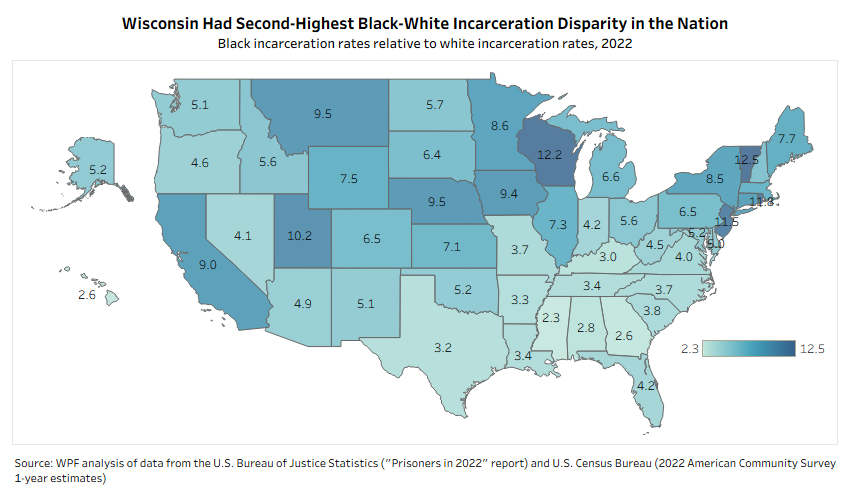
Data from 2022 reveals that Black residents of Wisconsin were imprisoned at a rate 12 times higher than their white counterparts. This alarming statistic ranks Wisconsin second only to Vermont in terms of racial disparity in incarceration rates.
According to Joe Peterangelo, the research director at the Wisconsin Policy Forum, “We found that Wisconsin has a pretty similar incarceration rate to the nation overall, but we have a high incarceration rate for the Black population specifically.”
The report attributes the disparity to several factors, including Wisconsin’s high level of segregation and significant income disparities among different racial groups. Notably, Milwaukee, home to more than two-thirds of the state’s Black population, experiences high poverty rates, which exacerbate these trends.
The study did not delve into the specifics of police deployment, but co-author Andy Tisdel pointed out that enforcement disparities might contribute to the incarceration rates. Tisdel remarked, “It’s possible that if law enforcement personnel are deployed to certain areas at higher rates, then crimes in those areas are more likely … to result in an arrest.”
While the number of Black individuals entering prison has seen a decline, they continue to be disproportionately represented within the system. Conversely, the report identifies a rising trend of incarceration among Indigenous Wisconsinites. Peterangelo noted, “If these trends continue, we would likely see the American Indian population as the most heavily incarcerated population in the state.”
The research for this report was funded by the Public Welfare Foundation, an organization dedicated to criminal justice reform. Current statistics show that over 23,000 adults are incarcerated in Wisconsin, a number that has been increasing slightly after a decline during the COVID-19 pandemic.