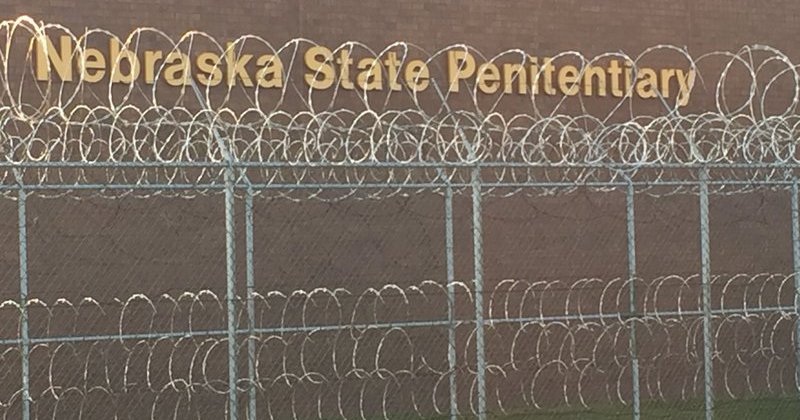
Just hours ahead of a planned court hearing, the Nebraska State Penitentiary reversed its decision to temporarily revoke Native American inmates’ access to an outdoor religious space.
This change followed a federal civil rights lawsuit filed by the ACLU of Nebraska and Big Fire Law & Policy Group. The legal action was initiated on behalf of two Native American prisoners at the Nebraska State Penitentiary (NSP), challenging the ban as unconstitutional.
“It should not have taken a lawsuit to reach this outcome,” stated Carter Matt, an ACLU staff attorney. He further expressed that the government had overstepped by preventing numerous individuals from engaging in their traditional religious practices and criticized officials for not responding to the inmates’ grievances.
The lawsuit was spearheaded by Joshua Lewis, of Cherokee and Tarasca descent, and Tremayne Scott, a member of the Rosebud Sioux Tribe. The ACLU reported that approximately 60 inmates at NSP were affected by the policy.
Prison officials had announced in late February that the Native American prisoners would be barred from their religious area for 60 days. This decision followed the discovery of contraband in an outdoor box used for storing ceremonial items such as sage and hand drums. However, the lawsuit noted that neither Lewis nor Scott were linked to the contraband, yet all Native American Faith Group members faced the suspension. Other faith groups with outdoor space access did not experience similar restrictions.
The ACLU had planned to request a temporary restraining order in federal court to demand the reinstatement of access for the Native American Faith Group. This hearing was canceled after the prison confirmed on Thursday morning that the policy had been rescinded.
In a memo shared by the ACLU, the facility’s warden stated, “Security measures have been added to allow reinstatement of religious land use.” Furthermore, the memo affirmed, “Effective today, NSP will resume the Native American religious land schedule in effect prior to the suspension period.”
The lawsuit remains active in federal court, and Chief U.S. District Court Judge Robert Rossiter mentioned that the hearing for the restraining order could be rescheduled if deemed necessary.