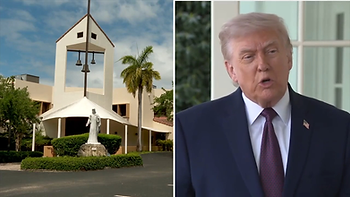
For more than six decades, Catholic Charities of the Archdiocese of Miami has been a lifeline for unaccompanied migrant children, offering shelter, meals, and pathways to family reunification. That enduring mission is now poised to end after a sudden federal funding cut.
In late March, the Office of Refugee Resettlement informed the Archdiocese that its $11 million contract would be terminated, affecting an 81-bed shelter, foster care placements and related services. The program, widely regarded as a national benchmark, must cease operations within three months.
The partnership began in December 1960 when Father Bryan Walsh—a young priest from Ireland—welcomed the first group of Cuban minors arriving alone at Miami International Airport. Parents had sent their children across the Florida Straits to escape Fidel Castro’s revolution. Over the next two years, more than 14,000 children passed through what became known as Operation Pedro Pan, the largest recorded exodus of unaccompanied minors in the Western Hemisphere.
Today’s center bears the name Msgr. Bryan O. Walsh in his honor, providing trauma-informed care and case management to vulnerable youth. Federal reviewers have often cited the program as an exemplary model for child welfare agencies nationwide.
Archbishop Thomas Wenski addressed the cancellation in remarks to the Miami Herald editorial board: “The U.S. government has abruptly decided to end more than 60 years of relationship with Catholic Charities in the Archdiocese of Miami. The Archdiocese of Miami’s services for unaccompanied minors have been recognized for their excellence and have served as a model for other agencies throughout the country.”
The decision reverberated across local parishes. CBS News Miami reported that church members were “beyond shocked.” Father Federico Capdepom, who retired in 2016 after 33 years of service, lamented:
“The children that we’ve helped for so many, many years — to abruptly cancel $11 million, I believe, of help for migrants, I think it’s totally unacceptable.”
Another parishioner described the move as “disgraceful.”
Concerns extend beyond emotion to the immediate welfare of children currently in care. An associate director at the University of Miami Law School’s Children and Youth Law Clinic cautioned that transferring these minors could inflict lasting harm:
“For little kids, moving repeatedly creates bonding issues and destroys the sense of both self and community. They don’t know who they are and where they will be from day to day.”
She added that relocation is “incredibly psychologically harmful.”
Archbishop Wenski acknowledged the number of children involved but said it did not justify dismantling a program crafted over generations: he called it “baffling” that the government would shut down a system “that it would be hard-pressed to replicate at the level of competence” demonstrated by the Church.
The move comes amid growing tensions between the Trump administration and Catholic leadership. President Trump has publicly criticized Pope Leo XIV, who has denounced hardline immigration policies and U.S. involvement in conflict abroad. In an April homily, the pope declared, “Stop! It is time for peace!” He also posted on social media, “God does not bless any conflict.” The pontiff questioned whether strict enforcement of immigration laws aligns with a “pro-life” ethic.
President Trump responded on Truth Social by calling the pope “WEAK on Crime, and terrible for Foreign Policy,” accusing him of pandering to “the Radical Left” and urging him to “get his act together.” He also shared an AI-generated image depicting himself in a Christ-like pose, drawing rebuke from church figures.
Aboard the papal plane on Monday, Pope Leo emphasized the human cost of conflict: “Too many people are suffering in the world today. Too many innocent people are being killed.”