The dynamics of mail-in voting in Nebraska have evolved significantly since the 2020 pandemic, with various societal and logistical factors influencing its popularity. According to Geis, the pandemic notably reshaped the way Nebraskans perceive and utilize mail-in voting, although he acknowledges that its usage has slightly decreased since then.
A primary driver for the continued interest in mail-in voting is the challenge of recruiting poll workers for in-person voting stations. Geis highlights that the cost-effectiveness of mail-in voting also contributes to its appeal. This method alleviates the difficulty for county administrators who struggle to find enough personnel for polling stations on Election Day.
“It was a question of whether or not they could find enough people to work the polls on Election Day,” Geis explained. “County administrators [were] looking for solutions to ensure people could cast a ballot and finding out that in-person polling places were just difficult to staff, difficult to pay for, difficult to administer effectively.”
For less populated counties, mail-in voting offers financial savings and eliminates the need to recruit poll workers. Additionally, it allows voters to research candidates thoroughly from the comfort of their homes, potentially leading to a more informed electorate. “Receiving a ballot at home allows me to research every candidate,” Geis stated.
Security Concerns from the Top Down
Former President Donald Trump has frequently voiced concerns about the security of mail-in voting. As recently as August, he took to Truth Social to declare his intention to eliminate mail-in ballots, citing unfounded claims that they encourage fraud and favor Democrats. Despite these assertions, countries like Canada, New Zealand, and several European nations continue to utilize mail-in voting.
In 2024, a social media video falsely claimed to show a “ballot mule” at a Lincoln drop box. However, Lancaster County Election Commissioner Todd Wiltgen clarified that security footage revealed the individual was simply a first-time voter excitedly taking a selfie after casting a single ballot.
Amid widespread election security concerns, Nebraska Secretary of State Bob Evnen sought to clear misconceptions by releasing a fact sheet and sharing a presentation with state senators.
State Senator Rick Holdcroft had introduced LB541, a bill requiring voters to provide an excuse to request mail-in ballots, though it did not pass. He expressed apprehension about the loss of control over ballots, suggesting that mail-in voting lacks the stringent voter identification measures present at polling stations.
Geis, however, argues that mail-in voting is both secure and impartial. “There are some that question the security of that, but there’s no evidence whatsoever that voting by mail is any more or less susceptible necessarily to election fraud than any other form of voting,” he remarked.
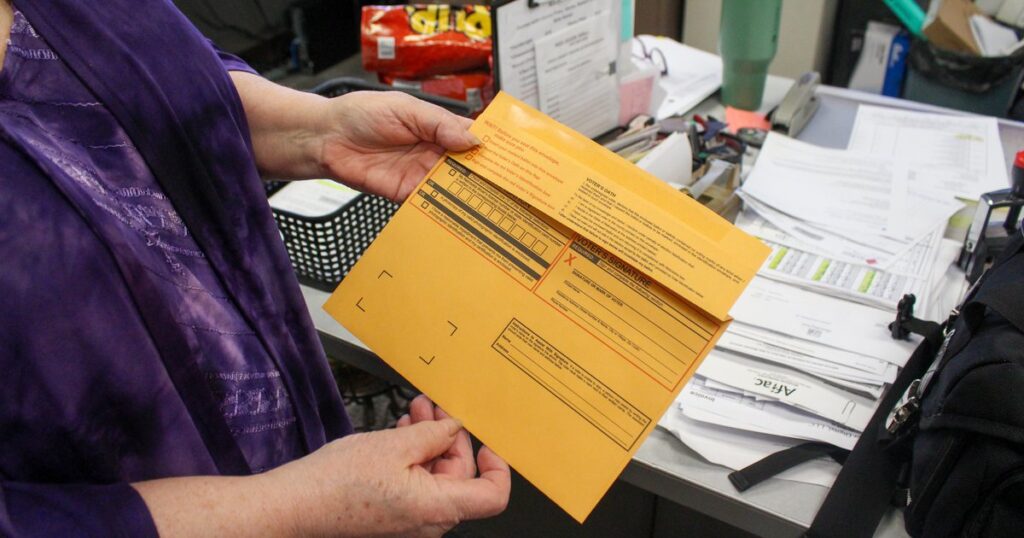
Recent changes have enhanced the anonymity of mail-in voting, as voters are no longer identified on envelopes. Geis assured that a robust tracking system allows Nebraskans to monitor their ballots via a digital platform hosted by the Secretary of State’s office. “Nebraskans can track their ballots clearly via the digital system,” Geis noted.
While voter ID requirements, signature verification, and ballot tracking contribute to the security of mail-in voting, Geis expressed disappointment over Trump’s persistent claims regarding election fraud. He believes such comments propagate unnecessary fear and are not grounded in fact.
In response to these concerns, a spokesperson for Secretary Evnen affirmed the security of Nebraska’s elections, stating, “Secretary Evnen shares President Trump’s strong interest in election integrity and recognizes that maintaining our high level of election security requires ongoing efforts to stay ahead of bad actors.”