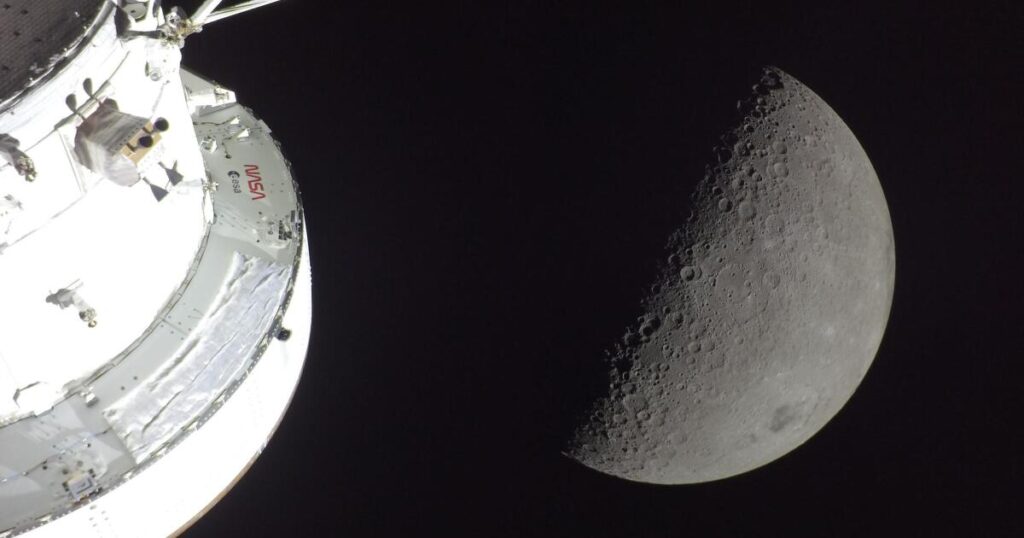
New Horizons in Space Exploration: The Artemis II Mission
The Artemis II mission represents a significant milestone in space exploration, marking humanity’s return to the moon after more than half a century. This mission has sparked widespread curiosity about its objectives after such a long hiatus.
According to Aditya G Nair, an aerospace engineer at the University of Nevada, Reno, the mission symbolizes a renewed drive in the arena of space exploration. “We have a renewed interest in space, in space technology. We have our eyes set on Mars and other planets, and a lot of space exploration. These missions open us up to some of the bigger challenges. Understanding, satisfying our intellectual curiosity about space, they help us make bigger leaps,” he explained.
Nair emphasized that the primary reason for not landing on the moon during this mission is the focus on familiarizing the Artemis team with the latest technology. “We want the astronauts to be familiar with these things. I’m sure when the astronauts come back, they will give feedback. Perfection in terms of space travel is gonna be difficult. There’s gonna be a lot of small issues on the way, but that’s what you want to navigate, and we would like to fix them for the next journey,” Nair noted.
The astronauts aboard Artemis II are scheduled to return to Earth on Friday, with a splashdown near the California coast anticipated around 5 p.m. PDT. Although the lunar flyby was the mission’s highlight, the operation remains incomplete until the astronauts safely land on Earth.