This coverage is made possible through a partnership between BPR and Grist, a nonprofit environmental media organization.
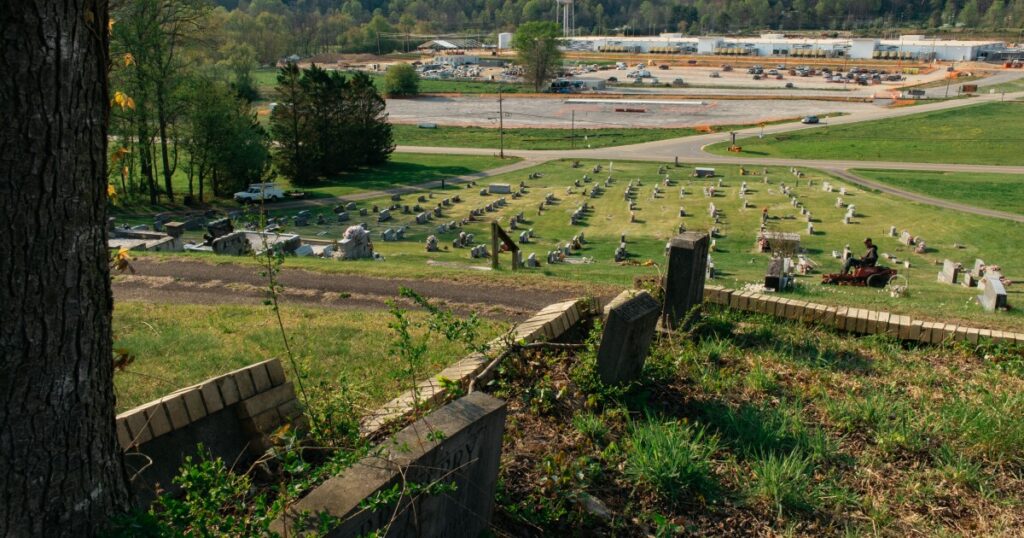
Amidst the serene landscape of Murphy, North Carolina, where tranquil environments once prevailed, the air now vibrates with the hum of a cryptocurrency mine. This noise has disrupted the peaceful lives of residents like Rebecca and Tom Lash since the facility’s establishment in 2021.
“There was nothing in this little pasture but these electric lines,” Rebecca Lash commented as she and Tom surveyed the area from a nearby hill. “And it was just nice and quiet.”
The local area is now undergoing a transformation as one of the three crypto mines transitions into a data center.
Crypto’s Downturn, AI’s Emergence
Cryptocurrency mining has become less profitable since 2021, leading many miners to transition towards artificial intelligence (AI) ventures. Communities in North Carolina hold mixed opinions about these data centers. While some perceive them as opportunities for economic growth, others express concerns over potential environmental and noise issues.
Tom and Rebecca Lash, who moved to Cherokee County eight years ago for its serene environment, have witnessed the establishment of three crypto mines near their home over the past five years, causing distress within the community. Online forums are filled with worries about increased noise, heavy machinery, and water usage.
“The big AI centers and the big data centers, there’s some horror stories about people that live near those,” Tom Lash shared, having sought clarity from local authorities.
“I went to the commissioner’s meeting and, you know, I asked, ‘What is that?’ And they were like, ‘We don’t know,'” explained Rebecca Lash, who received no reply from Murphy Utilities regarding her queries on potential bill impacts.
Energy Demands of AI
The energy-intensive nature of AI has led the Tennessee Valley Authority, Murphy’s power supplier, to consider expanding transmission infrastructure to accommodate the increased demand, potentially raising regional electricity bills.
Rural areas like Cherokee County appeal to data centers due to their abundant water resources, moderate climate, and lack of zoning restrictions. This allowed Core Scientific’s Marble crypto mine to transition seamlessly into an AI data center. Although Core Scientific’s merger with CoreWeave, an AI data storage company, fell through, the company continues to convert its facilities for AI purposes.
Despite requests, Core Scientific did not provide comments, and CoreWeave declined an interview.
A site plan submitted last year by Core Scientific outlined the use of over 170 diesel generators for the data center sprawling across seven acres. The location was previously a garment industry factory that ceased operations in 2015, resulting in significant job and tax revenue losses for the community.
Core Scientific is collaborating with nearby utilities for its water and sewer needs, drawing water from several onsite wells and purchasing a limited amount from the Marble Community Water System, according to C.B. McKinnon, president of the system’s board. The facility’s initial wastewater contract with the town of Andrews was denied due to the absence of an environmental plan, prompting the company to install its own septic tanks.
Despite the return of some taxes, including $268,000 in 2024, Cherokee County Commissioner Ben Adams is skeptical of the benefits. Adams, who opposes cryptocurrency, expresses concerns about noise and pollution from AI data centers and advocates for restrictions on such businesses.
At a county commission meeting, Adams urged the renewal of a moratorium on crypto mining, extending it to AI data centers. However, concerns about the impact of federal regulations on AI resulted in no immediate action.
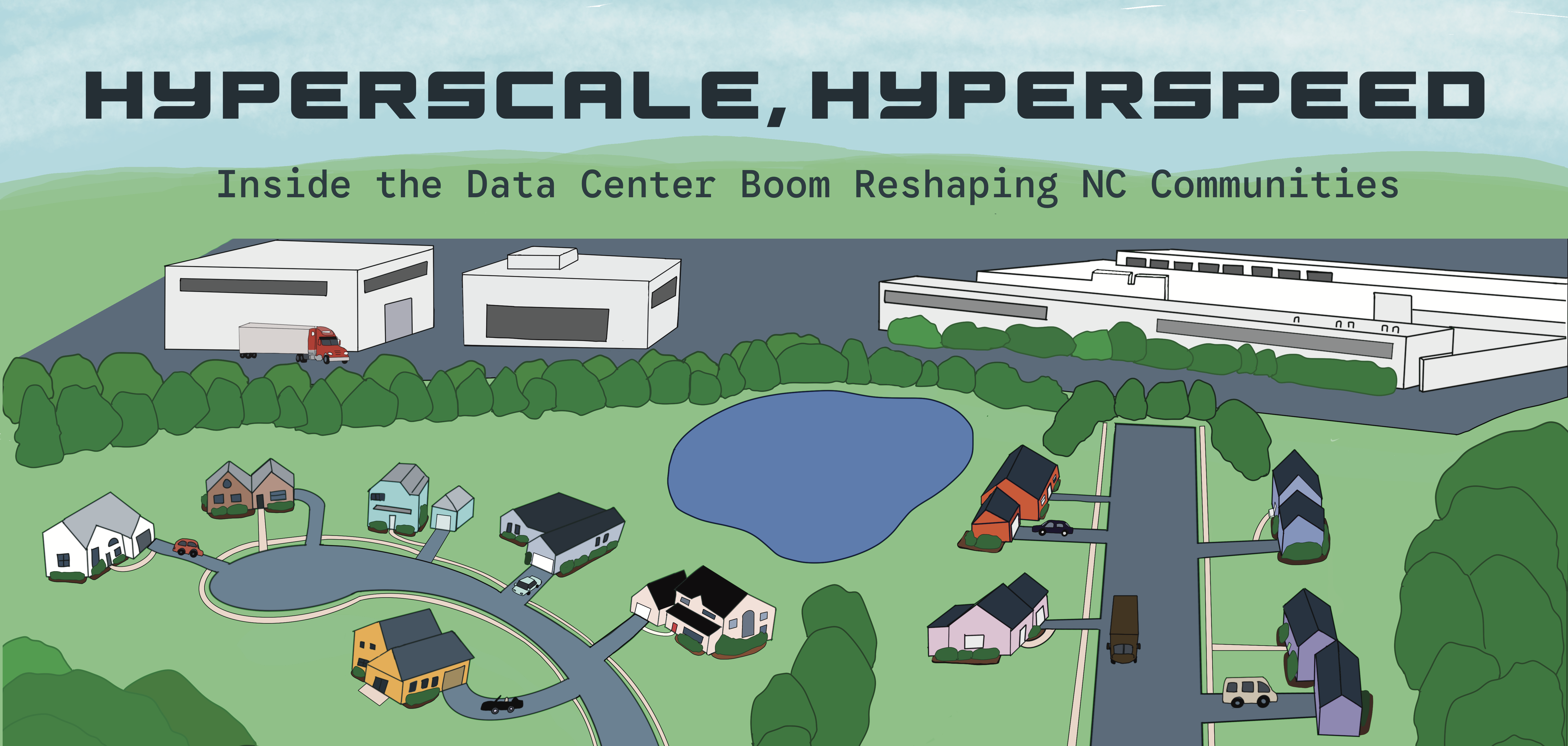
In this 6-part series, BPR, the NC Newsroom, WFAE, and WUNC explore North Carolina’s accelerating data-center boom and its real impact on local communities.
Through on-the-ground reporting, document reviews, and conversations with residents, the series examines how Big Tech is reshaping small towns, consuming vast amounts of power, and striking deals that aren’t always clear. It explores who benefits, who bears the cost, and why North Carolina has become an appealing target for server farms despite modest public scrutiny. By following the money, the energy demands, and the promises made to communities, the project aims to reveal what’s at stake as the cloud moves into the state’s backroads.
Negotiating with Tech Giants
Despite challenges, experts suggest communities have tools to manage incoming data centers. Nicol Turner Lee, director of the Center for Technology Innovation at the Brookings Institute, advises communities to secure written commitments from companies regarding environmental impacts and job creation.
Community Benefit Agreements (CBAs) are a potential solution, legally binding companies to respect local concerns. Lancaster, Pennsylvania, signed a CBA with CoreWeave, ensuring commitments to clean energy and controlled emissions.
Virginia, a prominent data center hub, is dealing with similar issues, with some areas imposing strict regulations on new proposals. However, existing centers remain outside these rules, highlighting the importance of initial community involvement.
Cherokee County’s Response
Following a county meeting in January, Commissioner Ben Adams, who will not seek reelection, is determined to address data center concerns. He aims to pass an ordinance without introducing zoning laws, balancing pro-business ideals with rural preservation.
The movement is gaining momentum, with moratoriums on data centers enacted in several Western North Carolina communities, potentially setting an example for others in the region.