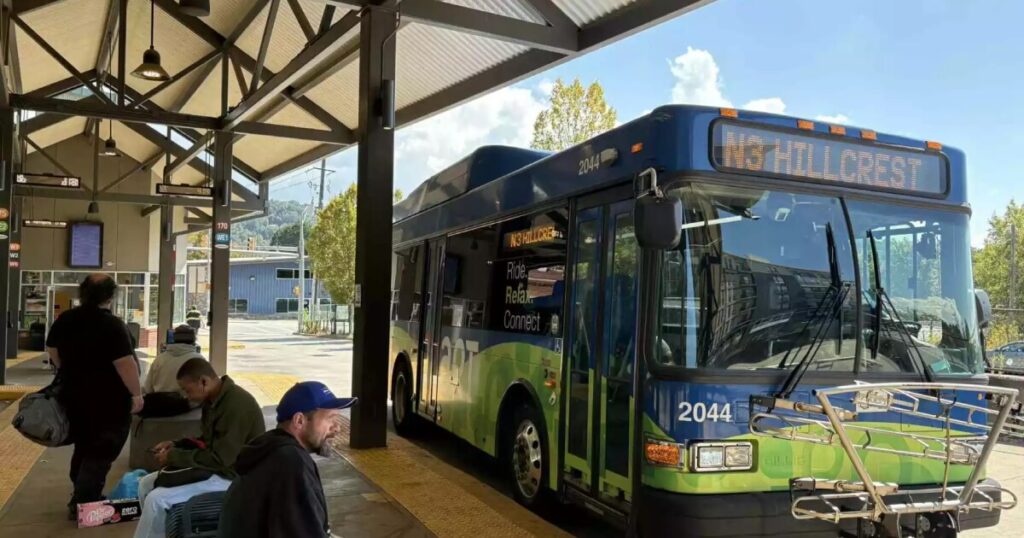
The Asheville Rides Transit system is on the cusp of significant transformation, with a new contract set to redefine its operations. The city has extended its partnership with RATP Dev, the existing operator, starting this July. Meanwhile, efforts are underway to complete a “Comprehensive Operational Analysis” by August, aimed at enhancing the system’s efficiency and service frequency.
Despite these developments, local transit advocates have expressed dissatisfaction with the city’s approach, particularly the perceived lack of transparency in decision-making processes. The Asheville City Council approved the RATP Dev contract, valued at nearly $55 million over four years, by a narrow 4-3 margin on March 24. This outcome surprised Steve Sprague, president of the Amalgamated Transit Union Local 128, who anticipated a change in operator due to past performance issues.
RATP Dev has been criticized for poor reliability, with buses running on time only 62% of the time as of last October. The new contract aims to improve this figure to 80%. Additionally, labor concerns have been raised over inadequate training for new hires, leading to unjust dismissals. Complaints have been lodged with federal agencies like the National Labor Relations Board and Equal Employment Opportunity Commission.
Briana Jones, a former employee, publicly criticized RATP Dev’s management at a city council meeting, describing it as “the most egregious management” she had experienced. She claimed her concerns were dismissed by the city’s transportation director, Ashley Haire. Company spokesperson Aleksandra Poplawska countered these claims, stating the system is fully staffed and focused on improving the rider experience.
According to assistant transportation director Jessica Morriss, RATP Dev was the only bidder to meet the city’s technical requirements. However, the city’s evaluation process has been criticized for excluding union members and failing to disclose the identities of other bidders. A public records request revealed only one other bid, from San Francisco-based WeDriveU.
Vice Mayor Antanette Mosley, who opposed the contract, expressed concerns about ongoing service reliability issues. She advocated for stronger performance standards and accountability measures. Council member Sage Turner, another dissenting vote, cited the rising cost of the contract, which increases by $800,000 to nearly $12.7 million for the next fiscal year.
Where are you going?
Separately, Asheville is conducting a $300,000 study on its bus routes, led by Portland-based consultancy Jarrett Walker & Associates. The study explores whether to prioritize wider reach or increased frequency in service. Public opinion on the matter is divided, prompting the city council to request improvements in bus frequency.
Concerns have arisen over the consultant’s ridership map, which omits several existing routes, leading to fears of potential cuts in service to areas like Oakley and North Asheville. Michael Stratton, an Oakley resident and regular bus rider, expressed unease over the hypothetical nature of the proposed map.
The Core Design Committee, tasked with reviewing the consultant’s work, has not met publicly since November. Vicki Meath, committee member and executive director of Just Economics, emphasized the importance of maintaining service to core communities and acknowledged the anxiety surrounding potential service cuts.
Asheville’s transportation department has developed a “Draft Network Plan” for the bus system, testing new route designs. However, the plan is not publicly accessible, existing only as data in software. Instead, “turn sheets” detailing proposed routes have been released.
Council member Kim Roney, a transit advocate, stressed the need for better community engagement in transit planning. “We exclude people instead of include people. Then the plan comes out, and there’s a robust community engagement against the plan, and then we blame it on the public as a culture of delay,” said Roney.