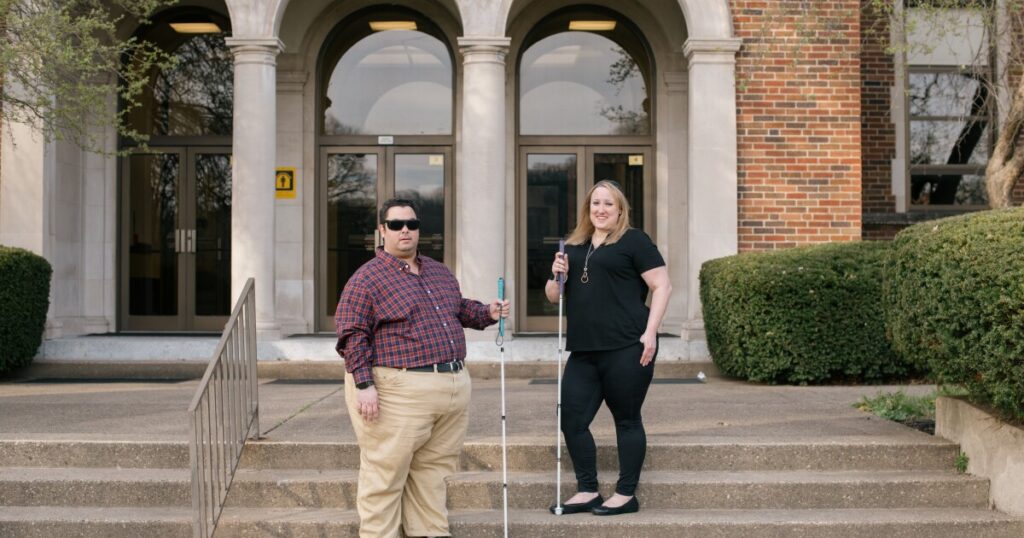
Amid the digital age, accessibility remains a critical challenge for students with disabilities. This issue is spotlighted by the experiences of Miranda Lacy and Harold Rogers, two blind students enrolled in an online Master’s program in Social Work at West Virginia University (WVU). Despite their hopes for an inclusive educational journey, they face significant hurdles due to inaccessible learning materials.
Lacy and Rogers, friends since undergraduate school, were thrilled to join the graduate program. However, they soon realized the difficulty of accessing course content that was not screen-reader friendly. Rogers describes the experience as “like going down a ski slope without any assistance.”
ADA Updates to Address Digital Accessibility
An upcoming update to the Americans with Disabilities Act (ADA) aims to improve digital accessibility. As the new regulation states, “inaccessible web content and mobile apps can exclude people with a range of disabilities.” Public institutions, including universities, are required to adhere to these new standards by April to ensure accessibility.
Challenges in the Classroom
For students like Lacy and Rogers, downloading a simple PDF can be a daunting task. Rogers illustrates how screen readers struggle with improperly formatted documents, leading to a frustrating educational experience. This issue highlights the importance of the ADA’s updated guidelines, which require digital content to meet the Web Content Accessibility Guidelines (WCAG 2.1).
Legal Action and Institutional Response
After attempts to resolve accessibility issues with WVU were unsuccessful, Lacy and Rogers, with support from the National Federation of the Blind, filed a lawsuit against the university. The suit claims systematic denial of equal access for blind students. WVU has declined to comment on the ongoing litigation.
Broader Implications of ADA Compliance
Jennifer Mathis from the U.S. Department of Justice emphasizes the need for clear technical standards in web accessibility as a civil rights issue. Judith Risch, formerly of the U.S. Department of Education, notes that these changes benefit all users by creating cleaner, more accessible digital environments.
Preparing for Change
Colleges are now tasked with ensuring their digital content is “born accessible,” according to ADA compliance officer Ella Callow at UC Berkeley. This shift requires substantial effort and resources, as noted by Corbb O’Connor of Level Access. The new rule encourages faculty and administrators to take responsibility for compliance.
Future Outlook
As Lacy and Rogers continue to fight for their rights, they anticipate a future where digital accessibility is standard. Their journey underscores the importance of the ADA’s updates, ensuring that education is within reach for all students, regardless of disability.
Edited by: Steve Drummond
Visual design and development by: LA Johnson