Amidst growing concerns about the future of agricultural research, experts warn that the United States Department of Agriculture (USDA) is facing challenges similar to those encountered by academic institutions. The decline in research funding and the loss of experienced personnel cast a shadow over the agency’s ability to address pressing agricultural issues.
“USDA programs have just been shredded in terms of research funding, as well as the capable, competent people who were the administrators of the grants programs,” remarked Cane. “It will be no better than the money that’s put into it, in part because that’s what hires good researchers, that’s what retains researchers and that’s what provides the number of units for expertise.”
In response, some university researchers are reaching beyond their local communities to make an impact. Garett Slater, an associate professor and honeybee extension specialist at Texas A&M University, has taken an initiative to address this challenge. He persuaded the Texas Department of Agriculture to invest in a bee disease testing lab at the university, aiming to provide rapid responses to potential crises.
Slater emphasized the importance of state-level action, noting, “I think at this point with the federal government being in limbo, that maybe it does come down to the state level and that we need to kind of develop things in a different way than we’ve always done it.” His previous experience as a postdoctoral fellow at USDA’s Baton Rouge bee lab informs his approach.
The localized testing facilities, Slater hopes, will enable areas like Texas to quickly obtain critical information during crises. Furthermore, a network of specialized bee labs across the nation could bolster the resilience of research efforts. “I think we can really add on to what [the USDA is] doing – like on the diagnostic part of it,” he stated. “They really can’t process all the samples in the entire country and do what some other labs are doing.”
Bee-keeping the faith
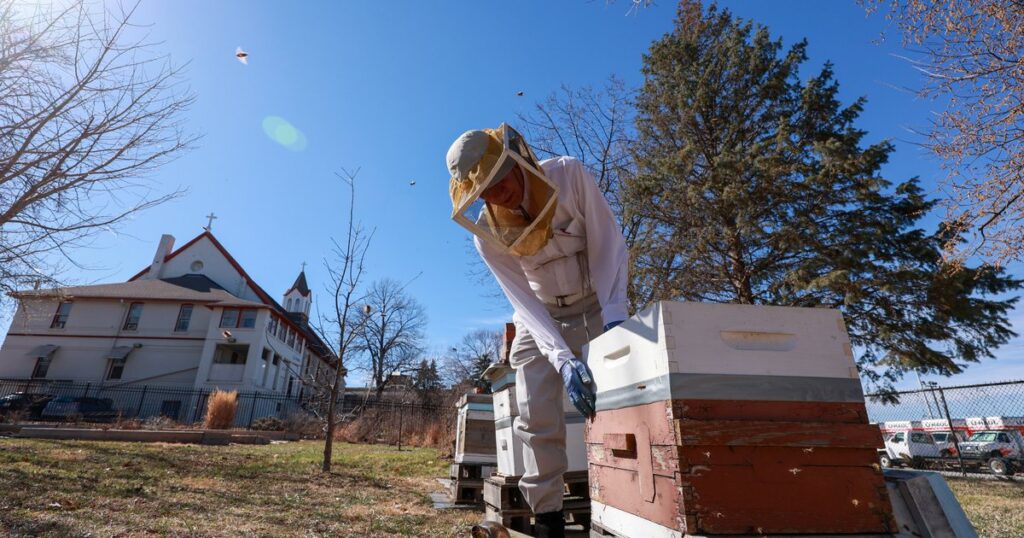
The massive honeybee die-off that spanned from June 2024 to March 2025 prompted swift action from USDA researchers at the Beltsville facility. Within six months, they identified the cause: viruses transmitted by pesticide-resistant mites.
Danielle Downey from Project Apis m. explained the adjustments beekeepers have had to make as pesticides lose effectiveness against mites. “After last year’s panic, they probably paid a lot more attention to varroa mites,” Downey noted. “They sampled more. They used a variety of treatments.”
Although widespread die-offs were avoided this past winter, Downey highlighted the increasing risks faced by beekeepers, especially those whose livelihoods depend on pollination contracts and honey production. “Even if we pulled it off this year, the margins of success and solvency are just thinner and thinner every single year,” Downey said. “But the need for bees doesn’t change, and the pressure on those businesses doesn’t change. It’s just more and more risk.”