University of Michigan Welcomes New Faculty Governance Leaders
In a significant development for the University of Michigan’s faculty governance, three distinguished faculty members will soon take on leadership roles within the institution’s executive committee. Their diverse backgrounds in medicine, engineering, and research science promise a multifaceted approach to addressing university challenges.
The Senate Assembly conducted an electronic vote from March 23-26, resulting in the selection of the following individuals to join the Senate Advisory Committee on University Affairs (SACUA):
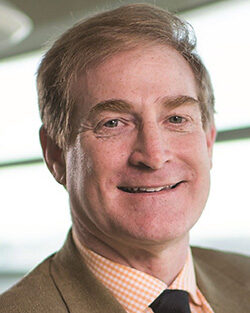
- Steven Buchman, M. Haskell Newman Collegiate Professor of Plastic Surgery, professor of surgery, and professor of neurosurgery, Medical School.
- Kim Kearfott, professor of nuclear engineering and radiological sciences, College of Engineering; professor of radiology, Medical School; and professor of biomedical engineering, College of Engineering and Medical School.
- Michael Schubnell, research scientist, physics, LSA.
The new members will commence their three-year terms on May 1, succeeding Vilma Mesa, Susan Najita, and Lauren B. Smith, whose terms conclude on April 30.
During his address to the Senate Assembly on March 23, Steven Buchman expressed concerns about a shift away from shared governance at U-M, which he believes has led to weakened faculty rights. He advocated for substantial reforms to create a more transparent and fair system. “I’m interested in transformational reform,” he declared, referencing the late Congressman John Lewis’s call to “make some noise and get in good trouble, necessary trouble.”
Kim Kearfott, a former SACUA chair, emphasized the need for interdisciplinary collaboration and robust faculty contributions. She aims to uphold shared governance and the rights of faculty members, stressing, “I cannot promise simple solutions, but I can promise transparency and accountability.”
Michael Schubnell highlighted the importance of protecting the university as a hub for free academic pursuits amidst external political pressures and the burgeoning influence of generative AI. He noted AI’s potential and challenges, emphasizing the need for faculty involvement in crafting comprehensive AI policies. “Generative AI is a structural change for universities. This is not a passing trend, whether we like it or not,” he stated.
Other candidates for the SACUA positions included:
- Germine “Gigi” Awad, University Diversity and Social Transformation Professor, and associate director, Global Islamic Studies, LSA
- Sun-Yung Bak, clinical associate professor of dentistry, School of Dentistry
- James Gulvas, senior associate librarian, Library Collections, University Library
- Niko Kaciroti, research scientist, pediatrics, Medical School; and research scientist, biostatistics, School of Public Health
- Mukesh Nyati, professor of radiation oncology, Medical School
- Merle Rosenzweig, librarian, Health Sciences, University Library
- Maria Silveira, associate professor of internal medicine, and adult hospice and palliative medicine research co-director, Medical School
- Lauren B. Smith, clinical professor of pathology, Medical School
SACUA serves as the nine-member executive arm of the university’s central faculty governance system, which also includes the Senate Assembly and the entire Faculty Senate.