Recent weather patterns have led to a significant regulatory action in North Carolina. The North Carolina Forest Service has enforced a statewide burn ban, making it illegal to ignite leaves, branches, or other plant materials beyond 100 feet from occupied structures. This prohibition also covers the use of fireworks and campfires but excludes portable gas stoves.
The decision comes in response to an extended drought that has gripped the state for several months. “I think a lot of people are surprised when they hear that this drought has now been going on for more than seven months, but it did start at the end of summer last year,” stated Corey Davis, the assistant state climatologist for North Carolina.
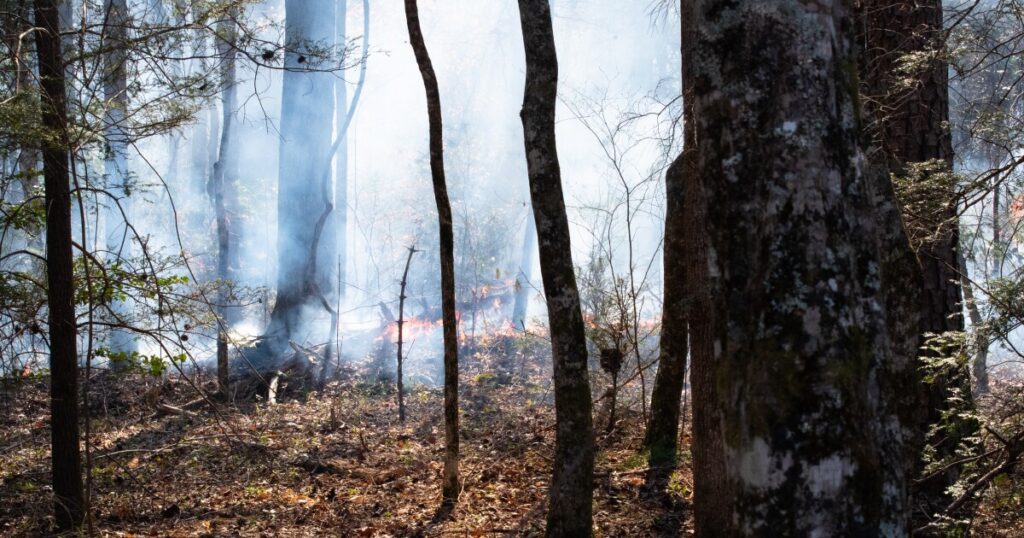
To mitigate wildfire risks, state agencies, private landowners, and tribal entities can perform controlled burns. These strategic fires, conducted before the onset of fire season, help reduce fuel for potential wildfires. However, these burns depend heavily on favorable weather conditions.
“The opportunities for prescribed burning are decreasing because of climate change,” Davis remarked. “It is getting too hot and too dry and too windy and just overall, too unpredictable to burn across a good chunk of the year.”
Recent Climate Conditions
According to Davis, fluctuating temperature patterns have played a role in the current burn ban. Charlotte experienced 10 days with temperatures over 80 degrees in March, matching its previous record for the month. Concurrently, frosty nights have destroyed plants, adding more potential fuel for fires.
“That vegetation is still coming out of dormancy. It is still fairly dry in a lot of spots, especially when we haven’t had the rainfall,” Davis explained. “That’s why the environment is just ready to burn now.”
As the spring wildfire season begins, over 7,000 acres have already burned in North Carolina, with little sign of conditions improving. “It’s a little bit depressing looking at the April forecast, because it looks like it’s going to be warm and it’s going to be dry,” Davis added. “After this weekend, not a whole lot of great rain chances, it seems.”
Human activity is a leading cause of wildfires in the region. Recently, a person in Marion unintentionally set off a 400-acre fire by discarding a cigar from a car window. North Carolina’s extensive wildland-urban interface, areas where natural vegetation and human development converge, exacerbates this risk.
“When it’s this dry at this time of the year, that means something very small like that can have pretty big consequences,” Davis concluded.