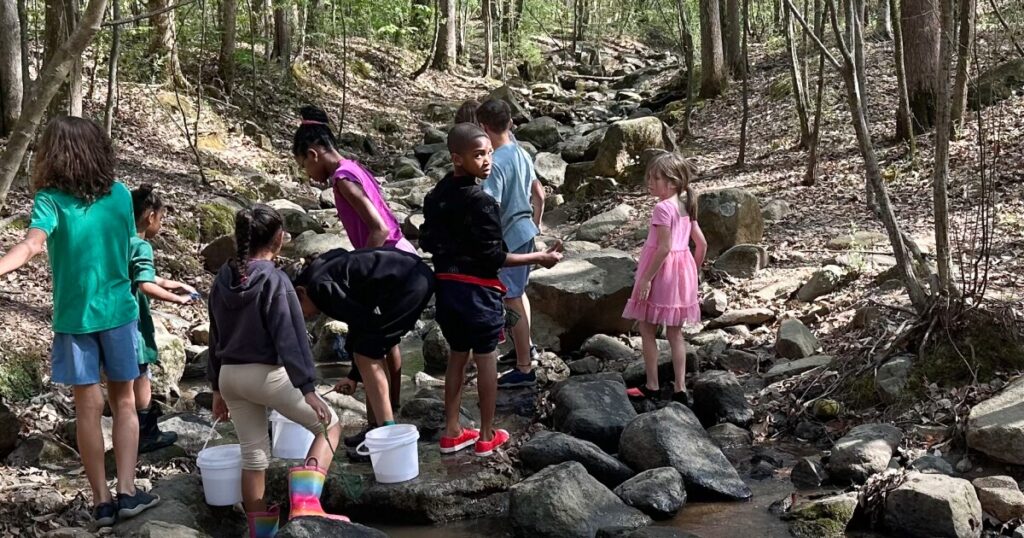
The rhythmic splash of dip nets and the excited chatter of children filled the air at Porter Branch Creek in McDowell Nature Preserve. Under the guidance of environmental educator Catherine Robertson, kids eagerly searched the water, capturing critters for close examination.
Exploring Stream Life
This Stream Watch program is a hands-on approach to understanding local ecosystems. Robertson explained, “Today, we’re having a Stream Watch program, and they’re going to take dip nets and buckets and actually look for little macroinvertebrates, salamanders and amphibians.” She added that participants would identify these creatures to assess the stream’s water quality.
As part of Charlotte-Mecklenburg Storm Water’s Creek Week, this initiative aims to raise awareness about environmental stewardship. Robertson emphasized the importance of clean streams, stating, “It’s important to keep it clean, because everything that flows downstream will affect the water quality for the people down there as well.”
Healthy waterways support diverse wildlife, including salamanders, which help control mosquito populations. Robertson pointed out that, “Having healthy amphibians, they eat a lot of insects that we don’t like getting eaten by in the summer.”

Macroinvertebrates, like caddisflies and mayflies, are crucial indicators of water quality. Robertson noted, “There’s some indicator species that are really sensitive to pollution, some that are a little more tolerant and some that are extremely tolerant to pollution.” Finding sensitive species such as salamanders suggests good water quality.
Creeks as Natural Climate Solutions
Clean water ecosystems also play a significant role in combating climate change by supporting biodiversity and sequestering carbon emissions. As Charlotte grows and climate change intensifies, maintaining these habitats becomes increasingly vital. Urban flooding, in particular, is a growing concern due to increased rainfall.
Marissa Barrett from Charlotte-Mecklenburg Storm Water Services emphasized the importance of well-maintained creeks for flood management, saying, “We’re making sure that our creeks and rivers are flowing properly.” This is crucial in a region facing rising flood risks, with Charlotte projected to see increased financial losses by 2050 due to flooding.

Charlotte’s Climate Risk Assessment identifies urban flooding as a moderate risk, with severe thunderstorms and extreme heat posing high risks. As development continues, impervious surfaces like roads and roofs exacerbate runoff and pollution issues, highlighting the need for community awareness.
Barrett stressed the importance of community action, saying, “It’s really, really important that we bring awareness to people to make sure that we’re telling them that only rain should go down these storm drains.”
Learn more about Creek Week!
Interested in exploring your neighborhood creek? Take the following advice:
- Take the road most traveled! Excessive foot traffic causes erosion along the banks and weakens the stream’s ability to process incoming stormwater.
- Put the rocks back where you found them! Odds are, they’re somebody’s home. Building rock dams can also disrupt the water’s flow.
- Pack out what you take in! Don’t leave any litter behind that will damage your local water quality. Don’t be afraid to leave with more trash to brought in while you’re at it!
- Join a guided tour with Catawba Riverkeeper, Charlotte-Mecklenburg Storm Water Services, or Park and Recreation to any of the over 3,000 miles of streams across the county.