In an unexpected turn of events, Justine Overacker found herself the focus of persistent attention from Library Board Trustee Gianna Jacks. This attention stemmed from Overacker’s public criticism of Jacks, a trustee with alleged undisclosed ties to a conservative activist. The situation has raised questions about privacy, public accountability, and the limits of civic engagement.
Overacker shared a voicemail with KUNR from Jacks, attempting to reach her after a series of public comments Overacker made regarding Jacks’s controversial actions. Jacks had been trying to contact Overacker for nearly a month, though Overacker remained puzzled about how Jacks obtained her contact information.
The controversy began when Overacker criticized Jacks following a report by KUNR that revealed Jacks’s financial connections with Nichelle Hull, an activist pushing for the reshelving of LGBTQ+ themed books. Such actions, according to a Texas District Court ruling, could be deemed unconstitutional censorship.
Outraged by the report, Overacker expressed her concerns in emails to Jacks’s fellow trustees and the Board of County Commissioners, urging Jacks’s resignation due to “blatant violation of the ethics standards.” Overacker accused Jacks of accepting political donations and bypassing meeting procedures to benefit Hull and Wake Up Washoe County.
‘Send a full retraction and apology’
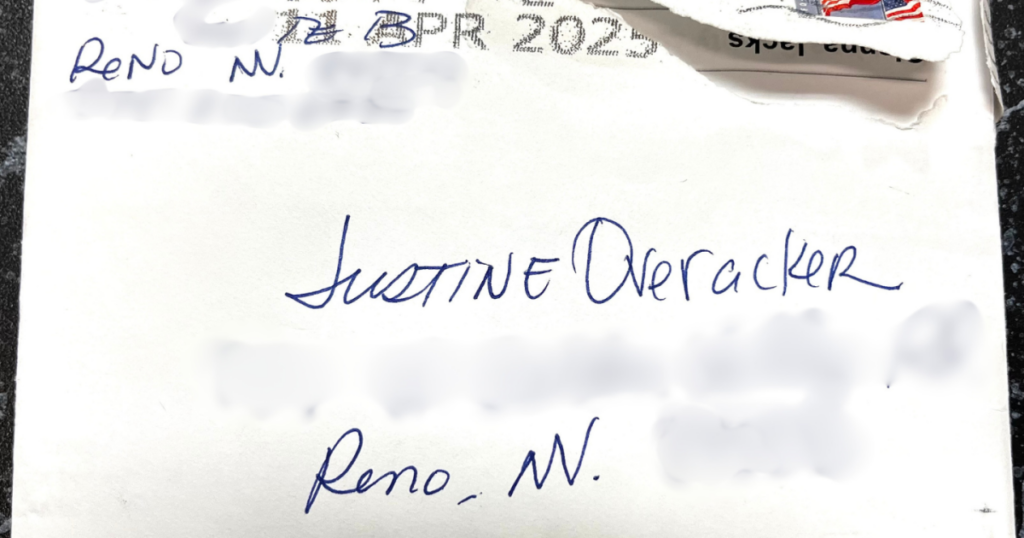
Records show that Jacks contacted Overacker at least nine times over the next year, demanding a retraction of Overacker’s statements and an apology. The exchanges escalated from emails to phone calls and even a letter to Overacker’s home.
Overacker, however, refused to engage, emphasizing her right to freedom of speech and expressing concern over what she viewed as Jacks’s infringement on her rights as a public official. Jacks did not respond to inquiries regarding her persistent attempts to contact Overacker.
After receiving the letter, Overacker attempted to file a code of conduct complaint against Jacks. A response from the county’s human resources clarified that the code of conduct did not apply to Jacks’s actions, as it is an internal policy for officials and public employees. Jacks’s attempts to contact Overacker ceased for a time afterward.
Brad Johnson, a political science expert from UNR, noted the unusual nature of the situation, highlighting the limited recourse available for addressing concerns about library trustees, whose roles are defined by state law and whose removal is contingent on specific circumstances.
A pattern emerges
Overacker is not alone in her experience with Jacks. William Puchert, another critic of Jacks, recounted similar experiences of harassment at both his workplace and in public settings. Puchert has been actively opposing Jacks for her associations with figures antagonistic to the library’s mission.
Puchert referenced past incidents where Jacks worked against library funding measures and events, aligning with conservative agendas. His encounters with Jacks at his workplace and in public settings further affirm a pattern of confrontational behavior.
‘Unbecoming of a public official’
In response to Overacker’s complaints, Jacks submitted her own public comment, once again challenging Overacker’s claims. Despite repeated requests for a retraction, Overacker stood by her original statements, criticizing Jacks’s behavior as unbecoming of a public official.
Library Board Chair Ann Silver refrained from directly addressing the appropriateness of Jacks’s conduct, highlighting the challenging nature of public service amidst harassment and criticism. Silver’s communications seem to indicate a reluctance to criticize fellow trustees openly.