Amidst ongoing concerns about funding adequacy for post-Hurricane Helene recovery efforts, federal authorities maintain that the financial resources are adequate. Despite this assurance, North Carolina state officials have expressed concerns about insufficient funds to accommodate all applicants for housing repair assistance.
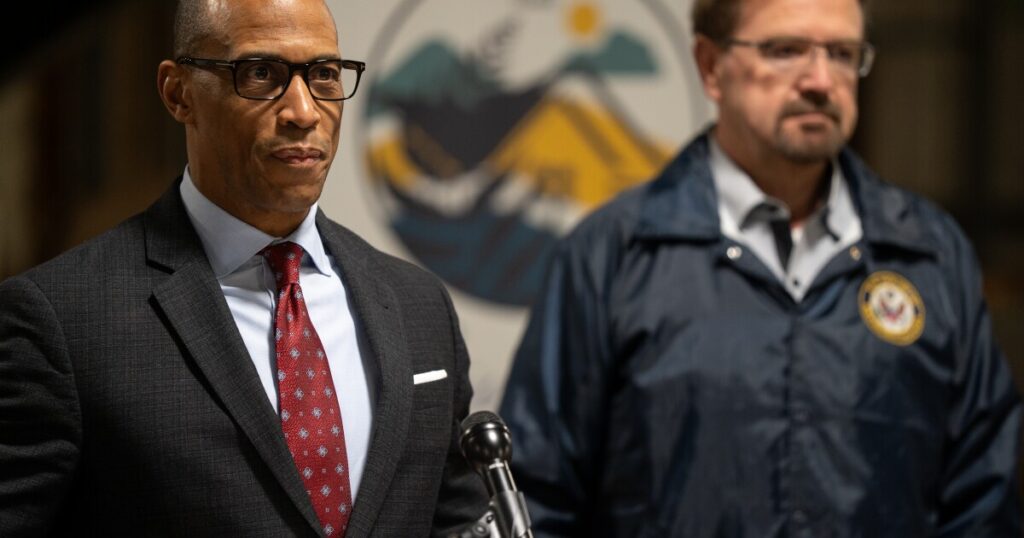
During a recent visit to western North Carolina, HUD Secretary Scott Turner clarified, “It’s not a funding problem. The money is there. It just has not been used in its totality.” In response to Hurricane Helene, HUD allocated $1.4 billion to the state via a Community Development Block Grant. Out of this, $860 million is earmarked for owner-occupied home repairs, with the state agency Renew NC currently evaluating nearly 8,000 applications.
Renew NC has approved 2,427 applicants for the program, with estimated repair costs ranging from $300,000 to $400,000 per home, according to program lead Stephanie McGarrah. The program caps individual repair grants at $450,000. Without additional funds, the program risks depleting its budget even at the lower end of repair costs, leaving over 1,400 applicants awaiting eligibility confirmation.
To date, 18 homes have been repaired or rebuilt.
Future Funding Hinges on Further Discussions
Turner criticized the state for only utilizing 1% of the $1.4 billion provided by HUD, referencing the process of drawing down allocated federal funds. He emphasized his openness to ongoing discussions with state officials, stating, “As these funds have drawn down more in the future, then we’ll continue to have conversations next.”
According to a February 2026 HUD expenditure report, the state has only drawn down less than 1% of the allocated funds, although the report still categorizes the spending as “on pace.” Matt Calabria, the Director of the Governor’s Recovery Office for western North Carolina, asserted that North Carolina has expedited fund disbursement faster than any other state affected by Hurricane Helene.
Calabria stated, “North Carolina is moving as quickly as it can to deploy that funding while meeting the numerous federal requirements.”
Both Turner and Rep. Chuck Edwards pointed to Senate Democrats for a partial government shutdown affecting the Department of Homeland Security, which funds FEMA. However, HUD’s funds are separate from those used by DHS and FEMA.
Addressing Housing Needs for Low-Income Residents
The HUD Community Development Block Grants, or CDBG-DR, play a vital role in rebuilding disaster-hit areas, with a significant focus on assisting low-income households. Rising construction costs and inflation have led Renew NC to increase its maximum award by $75,000.
“What we’re finding across the state is that we do not have enough money,” McGarrah told BPR News. Despite Turner’s visit, he did not meet with representatives from Renew NC.
Asheville received an additional $225 million from HUD for infrastructure and housing repairs, yet current funding only covers repairs for about 12 homes. James Shelton, Asheville’s Community Development Division Manager, remarked, “There generally, across the board, is not enough funding to meet all of the needs.”
Governor Josh Stein has requested an additional $13 billion from Congress, supplementing the $7 billion already allocated from the American Relief Act. Stein’s request includes $8 billion for further HUD funding, citing the region’s unique challenges and extensive damage.
The request to Congress highlights, “The extensive amount of damage and the unique topography of this region are increasing costs and demanding unique, flexible responses that the CDBG-DR program can allow for. Because CDBG-DR-funded projects do not require reimbursement like FEMA PA, the state can move forward simultaneously with multiple projects without cashflow concerns.”