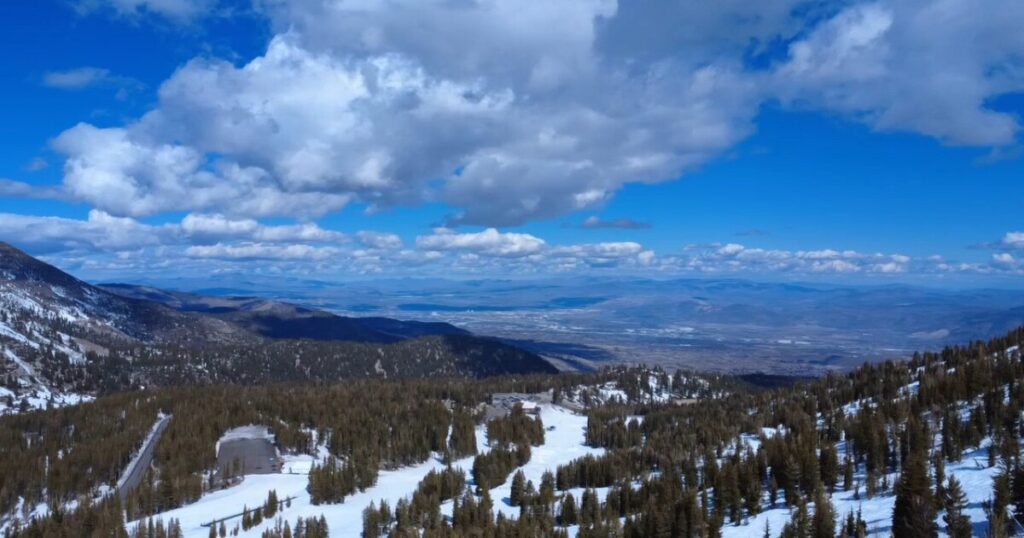
The Sierra Nevada recently experienced a welcome influx of snow following a prolonged dry spell. Yet, rising temperatures are causing rapid snowmelt in lower altitudes, posing potential challenges for water supply.
Anne Heggli, a researcher at the Desert Research Institute, keeps track of the snowpack in higher elevations. She notes that mid-February storms nearly brought snow levels to average. However, she emphasizes that the snowpack is still insufficient to meet summer water demands.
The current warm conditions heighten the risk of premature snowmelt, Heggli explains.
“These spring-like conditions and precipitation falling as rain are not really boosting the snowpack the way that we would hope or the way that we need when we get precipitation falling as snow,” she said.
Rainfall instead of snow accelerates the melting process. Heggli also mentioned that numerous national water and climate stations throughout the Sierra have reported unprecedented reductions in snowpack due to elevated temperatures.
For instance, on February 26, SNOTEL sites across the Sierra recorded the highest snow melt to date, according to the National Water and Climate Center.
“While it also showed minor flooding in the Portola area, there was no potential for flooding in the Reno-Tahoe area,” she said.
Heggli and her team are vigilantly monitoring the snowmelt, not due to flooding concerns, but to assess the snowpack levels required for summer water availability.