High School Program Sparks Career Path for Milwaukee Student
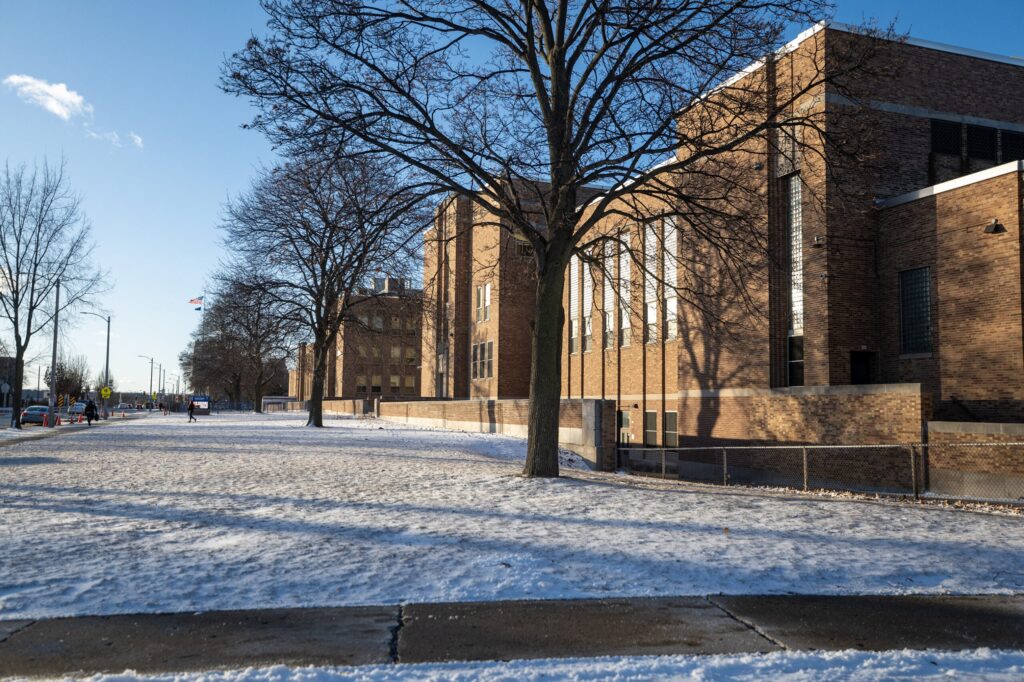
Kenya Brown’s journey into the healthcare sector began unexpectedly during her high school years at Carmen High School of Science and Technology. Encouraged by a teacher to participate in a career-readiness initiative, Brown found herself on a path that would lead to a promising career.
“I was like, sure, I ain’t got much to lose, right?” Brown recalled, reflecting on her decision to join the program. After graduating from Carmen in 2019, the opportunities continued to unfold.
Through Carmen’s dual enrollment program, Brown took college-level healthcare classes, earning credits for both high school and college. This initiative paved the way for her full-time role at Froedtert Health, where she is currently part of a management training program.
Brown attributes her current success to the dual enrollment experience. “Dual enrollment taught me to want more for myself,” she said. “I feel it’s like the reason that I’m in the position that I’m in now, which is a leadership role.”
Dual enrollment programs provide high school students with the opportunity to take courses that count for both high school and college credit, typically through partnerships with local colleges. This contrasts with Advanced Placement courses, which require students to pass an exam to earn college credit.
Despite the financial and time-saving benefits of dual enrollment, access remains uneven across Wisconsin. According to a 2025 Wisconsin Policy Forum report, participation in these programs nearly doubled from 38,435 students in 2015 to 78,703 in 2024. However, smaller, urban, and high-poverty schools are less likely to offer such courses.
Research by Marquette University’s Black and Latino/a Ecosystem and Support Transition (BLEST) Hub highlights these disparities. A recent survey of Milwaukee Public Schools showed low participation rates, with only 3.8 percent of the 29 schools surveyed engaged in dual enrollment.
Gabriel Velez, leading the BLEST Hub, noted that Milwaukee’s participation is well below the state average of just over 25 percent. He emphasized the transformative potential of dual enrollment, particularly for students less likely to attend college. “There are two ways this can happen. One, it can shift their thinking. And the other is it can make college cheaper and quicker,” Velez explained.
However, financial barriers stand in the way. Wisconsin does not allocate state funding for dual enrollment, as noted in a Columbia University report. A legislative proposal introduced by Republican lawmakers aimed to reform dual enrollment without addressing this funding gap.
Despite this, Velez remains optimistic. The proposed bill would establish an oversight council, including members from various educational bodies, to recommend strategies for making college credit more accessible and affordable for high school students.
“So that part, I think, to me, is the sort of the bigger step,” Velez stated. “The funding question, though, eventually, if Wisconsin really wants to move forward on this issue, that has to be addressed.”