In the wake of a tragic accident that claimed the lives of two cyclists and left one survivor, the push for safer roads is gaining momentum. Griffin Tichenor, the sole survivor of the incident on N.C. 251, is channeling his grief into action, advocating for enhanced road safety measures to prevent further tragedies.
Last July, Tichenor, Lennie Antonelli, and Jacob Hill were cycling along the scenic byway near the French Broad River when a box truck veered across the line, striking them head-on. The accident claimed the lives of Antonelli and Hill, leaving Tichenor as the only survivor. Now, six months later, Tichenor is committed to ensuring such incidents do not recur.
Addressing a gathering at Liberty Bicycles in South Asheville, Tichenor shared his journey of advocacy with over 100 attendees. The event marked the first meeting of the Asheville chapter of The White Line, a group dedicated to eliminating road fatalities and fostering safer streets.
“It’s been a tremendous weight,” Tichenor expressed during his speech. “But surviving that has meant for me, that it’s my responsibility to try and make sure it doesn’t happen to anybody else.”
In collaboration with The White Line, Tichenor is advocating for the Magnus White Cyclist Safety Act. This proposed legislation aims to mandate the inclusion of automatic braking systems in new vehicles, designed to detect cyclists and other vulnerable road users. Tichenor emphasized, “They missed the opportunity to also protect other vulnerable road users like bicyclists. The solution we’re proposing is very cost effective, at about $23 per car. It’s a software update, bolstering systems that are already required.”
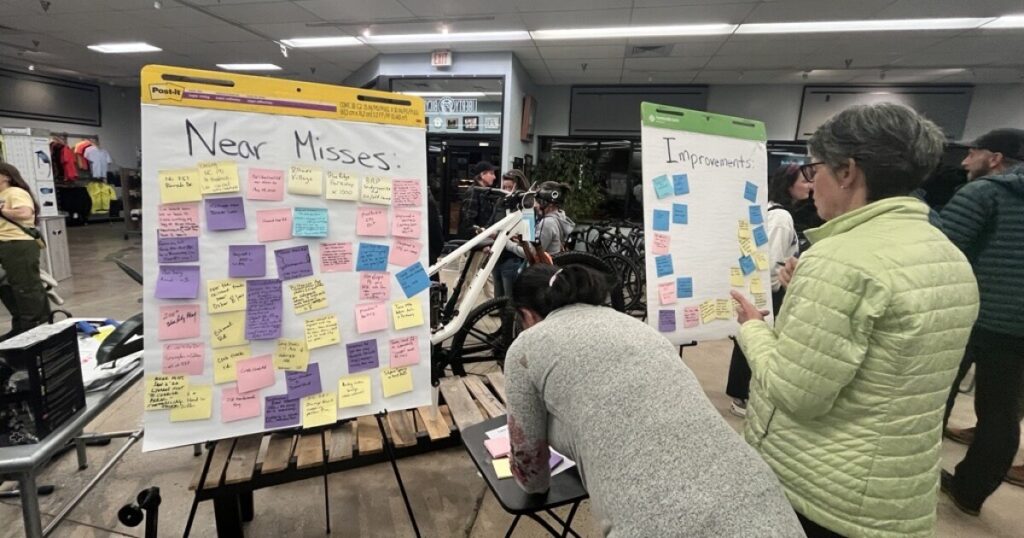
Tichenor is collaborating with Maddie Barondeau, who was engaged to Antonelli shortly before his untimely death. At the event, Barondeau encouraged attendees to mark places where they had close calls with vehicles on sticky notes, highlighting the significance of near-miss incidents. “A near miss is just as statistically significant as a crash. But, unfortunately, it’s not reported most of the time,” she noted.
The poster board quickly filled with notes detailing near misses across Asheville, from Biltmore Village to the Blue Ridge Parkway. “There are a lot of near misses, because a lot of these roads have no shoulders. And traffic has increased. The population has increased and the city has grown,” remarked participant Sara Shea.
Asheville has been identified as a perilous place for cyclists, with a report from the Asheville Citizen-Times ranking it first in North Carolina for cyclist fatalities per capita.
Efforts to improve road safety are ongoing. The North Carolina Department of Transportation has already implemented measures such as lowering speed limits and installing cyclist alert signs along Riverside Drive. Additionally, the French Broad River Metropolitan Planning Organization introduced the “Safe Streets for WNC” plan, which aims to cut fatal and serious injury crashes by 10% by 2035 and achieve zero fatalities by 2050.
The Asheville City Council has also approved projects to enhance cycling infrastructure, including a $2 million bridge crossing near Craven Street and a nearly $3 million pathway along Deaverview Road.
As Tichenor continues to push for the Magnus White Act, he is seeking support from Rep. Chuck Edwards (R-NC11). At the gathering, attendees were encouraged to write emails in favor of the legislation. “He’s got to feel the heat because cycling means a lot to this district and this community,” Tichenor stated.